
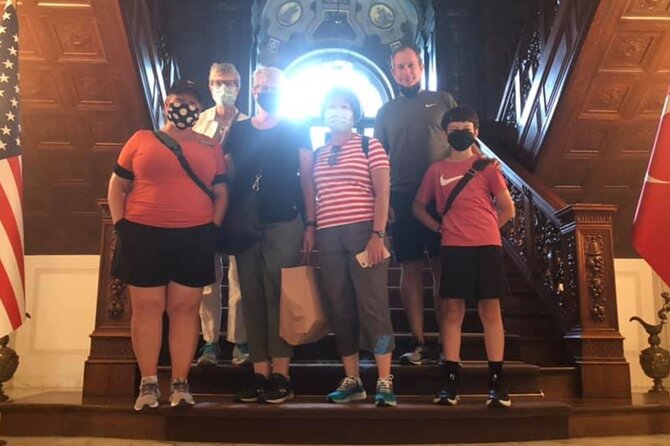
Reviewed · WASHINGTON DC
Embassy Row: Architecture, Mansions & International Intrigue
Washington’s Embassy Row turns a walk through a handsome residential neighborhood into a lesson in how power changes hands. Former Gilded Age mansions now house diplomatic missions, and the guide connects their architecture to the people who built them and the countries that use them today. I especially like the contrast between grand private homes and their present diplomatic roles, and the small-group format, capped at 15, leaves room for questions.
The main consideration is that this is an outdoor neighborhood walk, not a visit inside embassy buildings or historic houses. The route covers a lot of ground in about two hours, so expect a steady walk and stories from the sidewalk rather than interior access.
Key points
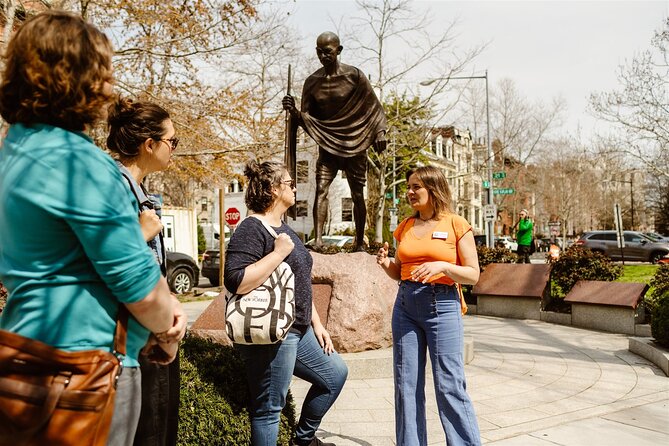
- Gilded Age mansions meet modern diplomacy: See former homes of wealthy Washington residents now used as embassy offices.
- A small group keeps the walk personal: The maximum group size is 15, a useful limit for hearing the guide and asking questions.
- The route has more than embassy façades: It includes Dupont Circle, the Saraswati statue, the Society of the Cincinnati, Sheridan Circle, the Woodrow Wilson House, and the Spanish Steps.
- Guides bring different strengths: Becca, Mark, Tyler, Dan, Eli, and John have led tours, with praise for clear storytelling, friendly conversation, and practical directions.
- Plan for an easy but continuous walk: The tour lasts about two hours and starts at 10:00 am at the Dupont Circle fountain.
- The $49 price buys a guided overview: There are no admission tickets listed, so the value is in the guide’s context and the route, not entry to buildings.
Where private mansions became diplomatic addresses
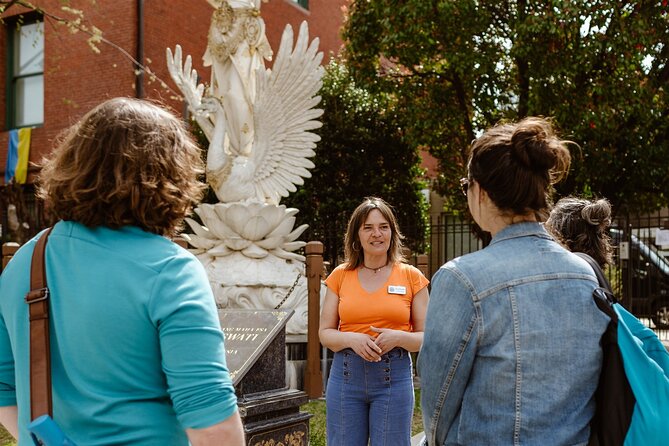
Embassy Row is most interesting when you look past the flags and plaques. The street’s large homes were built for wealthy families, and several now serve as offices for foreign ambassadors and diplomats. That shift gives the neighborhood a double story: one about private fortunes and another about how Washington became a center of international relations.
A good guide makes the façades useful rather than simply decorative. The homes’ scale and detail hint at the status their original owners wanted to project. Their current use adds a different layer: these are not just architectural keepsakes, but working diplomatic addresses. You’ll hear about the people behind the buildings and the institutions that took them over.
The walk is led by a professional licensed guide, and the small group size is a real advantage here. With no more than 15 people, it is easier to stay together on neighborhood streets and to ask questions without turning the tour into a lecture delivered to a crowd. Past guides include Becca, Mark, Tyler, Dan, Eli, and John. Several were praised for lively storytelling and for handling questions comfortably, while one guide helped with transportation directions.
That personal approach matters because the subject can otherwise feel like a parade of impressive houses. Stories of former owners, scandals, and diplomatic life give the architecture a human scale. If you enjoy history with a little gossip around the edges, this route has room for that too.
More ways to see Washington DC:
- DC Memorials Night Tour: Glass-Roof Convertible Upgrade Option
★ 4.5 · 6,933 reviews - National Mall Monuments Night Tour with 10+ Stops, Entry Tickets
★ 4.5 · 4,863 reviews - Washington DC Monuments by Moonlight Tour by Trolley
★ 4.5 · 3,956 reviews
Dupont Circle sets the scene
The meeting point is the fountain at Dupont Circle, where the guide spends about 10 minutes introducing the neighborhood. This is a useful start, not just a place to gather. The circle gives you a sense of the area’s role as a residential and social district, and the guide can point you toward places to eat or shop after the walk.
Arrive ready to begin at 10:00 am. The activity is listed as about two hours, and the opening talk is short, so being on time helps you catch the context before the group heads toward Embassy Row. The tour is offered in English and includes a mobile ticket.
Dupont Circle is also a practical place to orient yourself before continuing through the neighborhood. The tour’s focus is local history rather than a broad survey of Washington, so this opening helps set the limits and character of the walk. You are here to understand this particular stretch of the city, not to tick off every major monument.
Embassy Row’s mansions and changing occupants
The main Embassy Row section takes about 30 minutes. That is the heart of the tour, when the guide introduces the mansions once owned by millionaires and now occupied by diplomatic offices. The appeal is in seeing how the buildings’ original purpose and present role overlap, while hearing the stories that explain who built them and how their use changed.
Do not expect to go inside the embassies. The route is a guided walk along the row, and the stops are listed without admission tickets. Think of this as an outdoor architecture and history lesson: you get the setting, the façades, and the guide’s interpretation, rather than a tour of diplomatic interiors.
This is also where the format earns its keep. On your own, you can admire the houses, but the connection between a mansion’s former owners and its current diplomatic occupant is less obvious. The guide supplies that connective thread. If you are especially interested in architecture, look closely at the varied façades as you listen; if you are more drawn to history, pay attention to the changing fortunes and uses of the properties.
The tour has drawn particular praise for its stories about Gilded Age homes and their owners, including scandalous episodes. That mix keeps the subject from becoming a dry roll call of institutions. Still, a two-hour walk can only sample a neighborhood with many layers. Go in expecting a focused introduction, not every detail about every building.
The Saraswati statue and the Indian Embassy
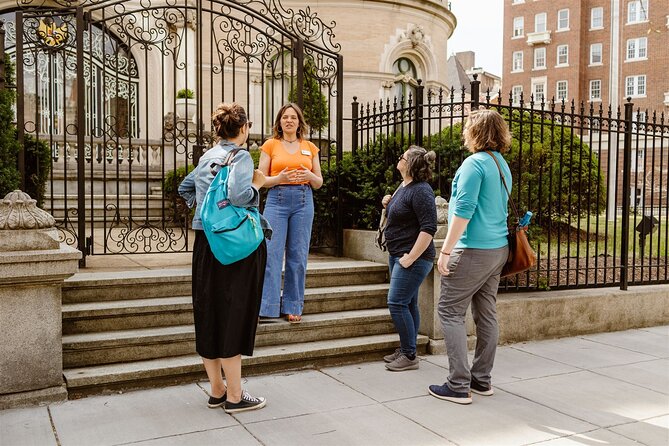
The Saraswati statue is a brief stop, about five minutes, but it brings a different kind of meaning to the route. Dedicated to the Hindu goddess of knowledge, music, and the arts, it is described as a tribute to cultural exchange and learning. The statue sits near the Indian Embassy and is surrounded by flowers.
The stop offers a change of pace from mansion architecture. It gives the guide a chance to discuss how cultural symbols appear in public space and how diplomacy can be expressed beyond formal offices. Because the visit is short, you may want to take in the statue and its setting promptly rather than expect a long presentation.
The nearby Indian Embassy stop also lasts about five minutes. The building is presented as a historic structure reflecting Indian heritage and cultural diplomacy. The Gandhi statue on Massachusetts Avenue NW is noted as a symbol of peace and nonviolence. These details make the area more than a sequence of imposing homes: it also connects national identity, public memory, and diplomatic ties.
Same city, a different angle:
- Hop-on Hop-off Sightseeing Tour by Open-top Bus with 18 Stops
★ 3.5 · 3,848 reviews - Washington DC in One Day: Guided Sightseeing Tour
★ 4.5 · 3,360 reviews - DC Monuments and Capitol Hill Tour by Electric Cart
★ 5.0 · 2,841 reviews - Washington DC Moonlight Tour by Electric Cart
★ 5.0 · 2,610 reviews
The Society of the Cincinnati and Sheridan Circle

At the Society of the Cincinnati, the guide spends about 10 minutes discussing the millionaires who built the home and the society that inherited it. This stop returns to the neighborhood’s history of wealth and influence, but with a new institutional chapter. It is a good reminder that large homes can outlast their first owners and take on lives that their builders may not have imagined.
The route then reaches Sheridan Circle, where the equestrian statue of Philip Sheridan prompts a question: what connects it to Mount Rushmore? The supplied details do not give the answer, so the guide’s explanation is part of the experience. It is a useful example of the tour’s style: a familiar-looking monument becomes an invitation to look closer and ask how people and places are linked.
The stop is short, around five minutes. Keep your attention on the guide and the statue rather than expecting time for a long independent visit. These brief pauses work best when you are comfortable moving at the group’s pace.
The Woodrow Wilson House and Spanish Steps

The Woodrow Wilson House is discussed from outside for about 10 minutes. The guide addresses the home’s connection to the former president and the unusual fact highlighted on the walk: Wilson was the only president to live in Washington after leaving office, apart from Barack Obama in the present-day comparison used by the tour.
Because this is an exterior stop, you should not expect a house tour. The value is the story attached to the address and the chance to see how a presidential residence fits into the surrounding neighborhood. If you want to explore the house itself, confirm separately what access is available; no interior visit is included in the tour information.
The final listed landmark is the Spanish Steps, a five-minute stop near Dupont Circle. Inspired by Rome’s famous steps, this staircase offers a quieter, more intimate bit of urban design among the neighborhood’s historic buildings and greenery. It rounds out the route with a different kind of sight: less mansion, more tucked-away public space.
The tour ends back at the meeting point. This is convenient if you want to return to Dupont Circle for food, shopping, or onward plans. The route’s listed stops have short durations, with walking between them filling out the two-hour schedule.
What $49 buys you
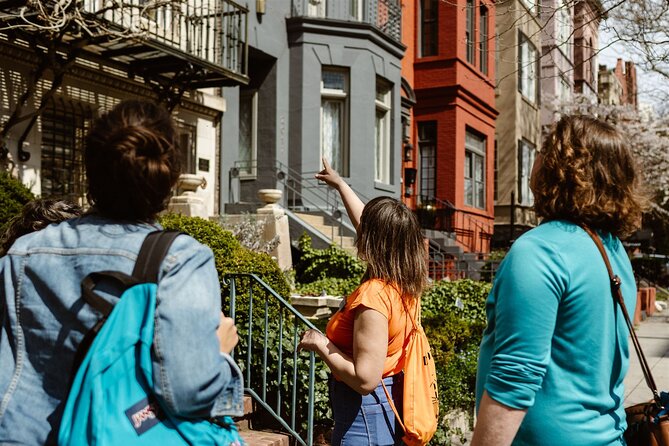
At $49 per person, this is not the cheapest way to walk through the neighborhood. But you are paying for a licensed guide, a two-hour small-group route, and the interpretation that turns buildings into stories. The price does not include admission to interiors, and no entry tickets are part of the experience, so the value depends on how much you want a guide’s context.
For someone who enjoys history, architecture, and neighborhood detail, the cost is reasonable for a guided walk with a cap of 15 people. The format is also more conversational than a large group tour. Past feedback has especially praised guides’ storytelling, easy pace, and willingness to answer questions. One person described the walk as long but easy, with plenty of shade, though shade can vary with the route and conditions.
If you already know Embassy Row well or prefer to explore independently with a map, you may find the route familiar. The tour is most useful when you want a clear narrative and a local guide to explain why these homes matter. A few past comments raise concerns about factual accuracy, so if a detail matters to you, ask the guide how they know it or follow up with a trusted source later. Most feedback emphasizes engaging stories and helpful explanations, but a thoughtful listener should feel free to ask questions.
The experience is listed as booked, on average, 23 days in advance. That figure is useful as a planning signal, not a rule. If this walk is central to your schedule, booking ahead is sensible. You can cancel up to 24 hours before the experience for a full refund.
Who will get the most from this walk
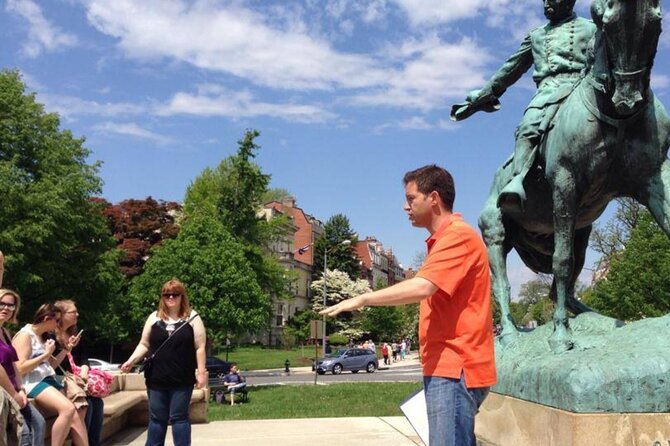
I’d recommend this tour if you like looking at buildings and asking who lived in them, what they wanted to show, and how their homes later found new uses. It suits first-time visitors who want a focused Washington neighborhood experience, as well as repeat visitors ready for something beyond the main memorials. The mix of mansions, diplomatic sites, statues, and local landmarks keeps the walk varied.
It is also a good fit for people who enjoy a guide’s stories more than a self-guided route. Several guides have been praised for making the history engaging, including Becca, Mark, Tyler, Dan, Eli, and John. The small group gives you a better chance to hear and join the conversation than a large tour, and one past participant noted that a guide spoke clearly enough for a person who was hard of hearing.
Consider another activity if you need indoor access, want a deep architectural survey, or have limited time for walking. Most travelers can participate, and service animals are allowed, but the activity is still a two-hour neighborhood walk. It begins at 10:00 am, in English, at the Dupont Circle fountain.
Should you book Embassy Row?
Book it if you want the stories behind Washington’s diplomatic façades and enjoy an easy-paced walk with a guide. The most compelling parts are the former mansions, their changing occupants, and the human stories that link the neighborhood’s private wealth to international life. At $49, the tour makes the most sense for someone who values a good guide and a small group more than entry to buildings.
Skip it if you would rather wander at your own pace or need an indoor attraction. For everyone else, this is a practical way to see a distinctive part of Washington, ask questions, and leave with a better sense of what lies behind Embassy Row’s impressive fronts.
FAQ
How long is the Embassy Row tour?
The guided walk lasts about two hours.
Where does the tour start?
It starts at the Dupont Circle fountain in Washington, DC.
What time does the tour begin?
The start time is 10:00 am.
Where does the tour end?
The activity ends back at the meeting point.
How large is the group?
The maximum group size is 15 travelers.
What language is the tour offered in?
The tour is offered in English.
Can I cancel for a refund?
You can cancel up to 24 hours before the experience for a full refund.
New on the list in Washington DC
- Washington, DC: Thanksgiving Day Lunch Cruise★ 4.7 · 3 reviews
- White House at Night: Scandals & Murder Adults Only Tour★ 4.5 · 4 reviews
- Washington Monument Ticket & National Mall Memorials Tour★ 5.0 · 16 reviews
- Washington DC: Private Custom Tour with a Local Guide★ 4.9 · 4 reviews
- Washington DC: Highlights Guided Walking Tour★ 4.6 · 6 reviews
- Thomas Jefferson Monticello Small Group Day Tour from DC★ 4.8 · 16 reviews
- Washington: Mt. Vernon, Alexandria & Arlington Cemetery Tour★ 3.4 · 8 reviews
- Washington, DC: The Good Liar: Brian Curry★ 5.0 · 3 reviews