
Reviewed · WASHINGTON DC
District of Punk
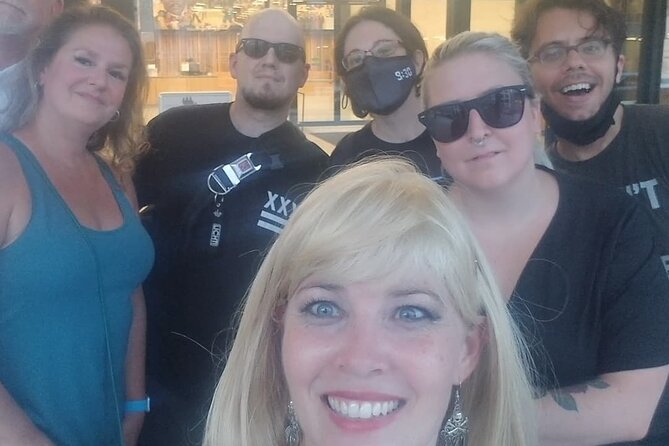
Washington’s punk story is not confined to a record sleeve or a famous club. On this 90-minute walk, you connect the music to the places where DC’s punk, hardcore, and post-punk scenes took shape, ending at a library archive devoted to preserving their traces. The route is compact, but the ideas behind it are anything but.
I like that the tour focuses on local venues and people, rather than treating punk as a story imported from London, New York, or Los Angeles. I also like the finish at the DC Punk Archive in MLK Memorial Library: it gives the walk a useful endpoint and points you toward the material that documents the scene.
One practical wrinkle needs attention before you go: the tour information gives a second-Saturday 1pm schedule, but also lists a 10:30am start. Check the confirmed time with Off the Mall Tours before setting out. The stops are outdoors, and the experience may be canceled for poor weather.
At a glance
- The route follows real music landmarks: Stops include the former DC Space, the Lansburgh Center site, and the first 9:30 Club location.
- The story spans several eras: The tour covers DC punk in the 1970s, hardcore in the 1980s, and post-punk in the 1990s.
- The final stop is an archive: MLK Memorial Library holds the DC Punk Archive, a collection of material documenting the local scene.
- It is a short, walk-based experience: Plan for about 90 minutes, with no private transportation included.
- The group is capped at 20: That keeps the tour relatively small, though the group will still gather at public city locations.
- The schedule needs confirming: The stated recurring time and the listed start time do not match.
DC punk, told from its old venues
The tour makes a case for DC as more than a footnote in American punk. Its central idea is that the city’s music scene grew from local pressures and local spaces, not simply from trends arriving from elsewhere. In the 1980s, the Reagan administration was reinstating the Selective Service, and the broader cultural mood was shifting from the counterculture toward yuppie ambition. Punk offered a forceful response to what some in the scene saw as a soulless government and a complacent society.
That context helps explain why the walk is more than a string of addresses. A club or community space can look ordinary once its music has stopped, but knowing who gathered there and what took place gives the address a second life. Your guide connects those locations to the people and scenes that made them matter.
The route also covers three connected periods: 1970s punk, 1980s hardcore, and 1990s post-punk. That range is useful if your picture of DC punk begins and ends with hardcore. You get a broader account of how local music changed over time, while keeping the focus on the city itself.
More ways to see Washington DC:
- DC Memorials Night Tour: Glass-Roof Convertible Upgrade Option
★ 4.5 · 6,933 reviews - National Mall Monuments Night Tour with 10+ Stops, Entry Tickets
★ 4.5 · 4,863 reviews - Washington DC Monuments by Moonlight Tour by Trolley
★ 4.5 · 3,956 reviews
Starting near Gallery Place
The meeting point is Gallery Place Chinatown Station in central Washington. That is a practical place to begin if you are already exploring downtown, and it puts you close to the first stops. You will meet the group on foot; private transportation is not included.
The group limit is 20 people. That is small enough to make questions and conversation feel plausible, though this is still a city walk, not a private tour. You will be moving among busy central streets, so wear shoes suited to walking and arrive with enough time to find the meeting point.
There is an important scheduling conflict in the available details. The tour is described as running on the second Saturday of each month at 1pm starting in March 2025, while the start-time field says 10:30am. Do not guess which one applies to your date. Confirm the departure time directly with Off the Mall Tours before making plans around it.
443 7th Street NW and DC Space
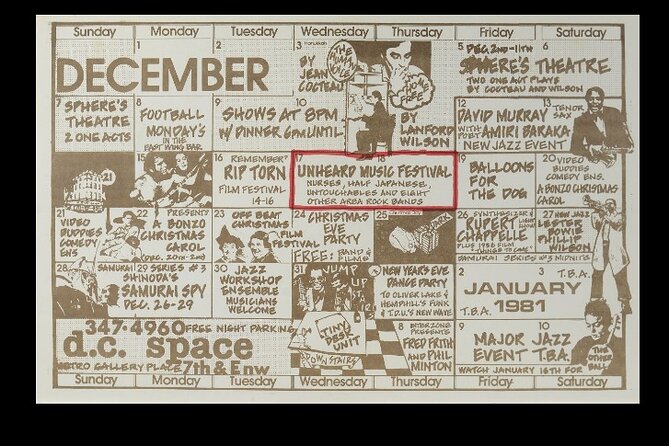
The first stop is 443 7th Street NW, the former site of DC Space. The venue was the first club to host the Unheard Of Music Festival, giving it a place in the story of how local music found room to gather and reach an audience. The stop is listed for about 15 minutes.
The building is a former venue, not a working club, so the value is in the story your guide tells about the place and its role. This is a good reminder of what makes a historic music walk different from a concert: you are looking at the physical city while reconstructing the scene that once occupied it.
DC Space also helps establish the tour’s local scale. The scene did not depend only on large, famous stages. Smaller places could give emerging musicians a platform and bring people together around music that did not fit the mainstream. Your guide can make those connections more clearly than a plaque or a quick photo stop can.
The Lansburgh Center site
The walk continues to the former location of the Lansburgh Center, a popular venue for punk shows in the 1980s. This stop is also allotted about 15 minutes. Its importance lies in the way it brings the hardcore era into focus and shows that DC’s punk activity was spread across more than one address.
The site is a former venue, so do not expect an operating music space or an indoor visit. Instead, use the stop to picture how the venue fit into the wider network of places that supported local shows. The tour’s value here depends on the guide’s account of the people, music, and atmosphere associated with the location.
Taken together with DC Space, the Lansburgh stop gives you a useful contrast between the scene’s earlier roots and the prominence of 1980s hardcore. If you already know bands or stories from that period, you may find the local geography especially rewarding. If you do not, the guide’s explanations help connect the names and addresses to a larger cultural moment.
Same city, a different angle:
- Hop-on Hop-off Sightseeing Tour by Open-top Bus with 18 Stops
★ 3.5 · 3,848 reviews - Washington DC in One Day: Guided Sightseeing Tour
★ 4.5 · 3,360 reviews - DC Monuments and Capitol Hill Tour by Electric Cart
★ 5.0 · 2,841 reviews - Washington DC Moonlight Tour by Electric Cart
★ 5.0 · 2,610 reviews
The original 9:30 Club location
The tour then visits the former location of the first 9:30 Club, now one of DC’s best-known performance venues. This stop is listed for about 15 minutes. The key point is the distinction between the original site and the current venue: the tour visits where the first club operated, rather than taking you to a show at today’s 9:30 Club.
That makes this stop valuable even if you already recognize the name. It puts the club’s early role in the city’s music story into context and helps trace how a local venue can become part of a much larger cultural identity. The tour is not promising access to a concert space or a backstage visit, so think of this as a history stop, not a venue tour.
For music fans, this may be the most immediately familiar name on the route. For others, it provides a clear way into the story: start with a club you can identify, then follow the guide’s account of the musicians and scenes that gathered around it.
Finishing at the Punk Archive
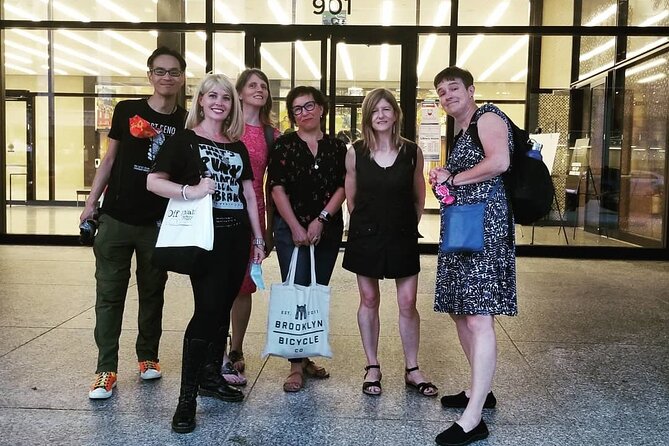
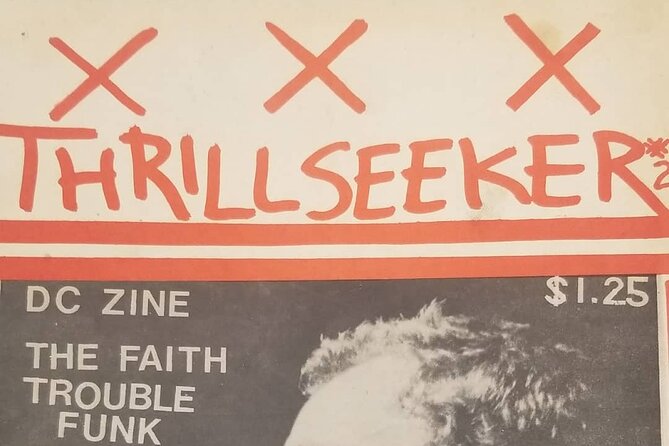
The final stop is Martin Luther King Jr. Memorial Library, where the DC Punk Archive is held. The stop itself is listed at about 10 minutes, and the library is the tour’s endpoint. The archive is described as the only collection of punk ephemera documenting the DC scene, making it a fitting finish to a walk built around places that have changed or disappeared.
The archive matters because punk history often survives in modest forms: materials that can be easy to lose, overlook, or discard. A collection devoted to documenting the local scene gives the tour a link to its records, not just its former venues. The information provided does not promise a formal archive visit or time to browse individual items, so treat the library as the endpoint and ask the guide what access or viewing is possible on your date.
The library also gives you a natural place to pause after the walk and reflect on how the story is preserved. The route begins with former clubs and ends with an institution that holds evidence of the music and its community. That is a thoughtful structure, especially for a tour about a scene whose history may not be obvious from the street.
What the 90 minutes include
The experience lasts about an hour and a half and includes four listed stops. The stop times add up to roughly 55 minutes, leaving the rest of the advertised duration for walking between locations and the guide’s commentary. The exact timing of each walk or discussion is not specified, so expect the pace and emphasis to depend on the group and the guide.
The tour is described as including 1.5 hours of information about DC’s punk scene. There is no private transport, and the route is in central Washington, so you should be prepared to walk between the sites. The meeting point is near public transportation, and the end point is MLK Memorial Library on G Street NW.
A past tour was led by Katie of Off the Mall Tours. That gives you a guide name associated with the experience, though it does not guarantee who will lead your particular departure. The small maximum group size of 20 is a plus for a history-focused walk: it should be easier to hear the guide and ask questions than in a large coach group.
Is $30 a fair price?
At $30 per person, this is a reasonable price if you want a guided account of DC music history rather than a self-guided walk between addresses. The fee covers about 90 minutes of context and interpretation, while the locations themselves are free to visit. You are paying for the connections among the places, not for entry to a club or a performance.
That distinction matters. If you only want to photograph the former venues, you could visit the area on your own. But it would take research to understand why DC Space hosted the Unheard Of Music Festival, what the Lansburgh Center meant to 1980s punk, and how the first 9:30 Club fits into the city’s music story. A guide can bring those threads together efficiently.
The tour is best suited to music fans, people curious about Washington beyond its monuments, and anyone interested in how local scenes take shape around community spaces. You do not need to be a punk expert to follow it, but a little familiarity with the music may help you catch more of the references. If you prefer indoor exhibits, active venues, or a tour with extensive access to archival material, this may not match what you are looking for.
Weather and booking details
The tour requires good weather. If poor weather causes a cancellation, you will be offered another date or a full refund. It also requires a minimum number of participants, so a departure can be canceled if that threshold is not met, with a different date or experience or a refund offered.
Confirmation is provided at booking, and free cancellation is available up to 24 hours before the experience begins. Changes or cancellations inside that 24-hour window are not accepted for a refund. Service animals are allowed, and most people can participate.
Because the time information conflicts, make the start time your first question when you confirm. Also check the weather close to the date, since the walk depends on outdoor conditions. Those two simple checks will help you avoid the main practical surprises.
Should you book the District of Punk tour?
Book it if you want a compact, guided look at a side of Washington that can be easy to miss amid the monuments. The route links DC Space, the Lansburgh Center, and the first 9:30 Club to a local story that spans punk, hardcore, and post-punk, then finishes at the DC Punk Archive.
Skip it if you are mainly seeking a concert, an indoor museum visit, or guaranteed time to examine archival objects. At $30, the tour offers its best value to people who care about the meaning behind the addresses. Confirm the correct departure time before booking your day, and you will know what kind of walk you are signing up for.
FAQ
How long is the District of Punk tour?
The tour lasts approximately 1 hour and 30 minutes.
How much does the tour cost?
The price is $30 per person.
Where does the tour start and end?
It starts at Gallery Place Chinatown Station in Washington, DC, and ends at Martin Luther King Jr. Memorial Library, 901 G Street NW.
Which locations are included?
The tour visits the former DC Space at 443 7th Street NW, the former Lansburgh Center location, the first 9:30 Club location, and MLK Memorial Library.
When is the tour offered?
It is described as running on the second Saturday of each month at 1pm starting in March 2025. The start-time information also lists 10:30am, so confirm the time for your date with the operator.
How many people can join?
The maximum group size is 20 people.
What happens if the tour is canceled because of bad weather?
You will be offered a different date or a full refund.
New on the list in Washington DC
- Washington, DC: Thanksgiving Day Lunch Cruise★ 4.7 · 3 reviews
- White House at Night: Scandals & Murder Adults Only Tour★ 4.5 · 4 reviews
- Washington DC: Private Custom Tour with a Local Guide★ 4.9 · 4 reviews
- Washington Monument Ticket & National Mall Memorials Tour★ 5.0 · 16 reviews
- Washington DC: Highlights Guided Walking Tour★ 4.6 · 6 reviews
- Thomas Jefferson Monticello Small Group Day Tour from DC★ 4.8 · 16 reviews
- Washington: Mt. Vernon, Alexandria & Arlington Cemetery Tour★ 3.4 · 8 reviews
- Washington, DC: The Good Liar: Brian Curry★ 5.0 · 3 reviews