
Reviewed · WASHINGTON DC WALKING TOURS
Dupont Circle and Embassy Row Architectural Walking Tour
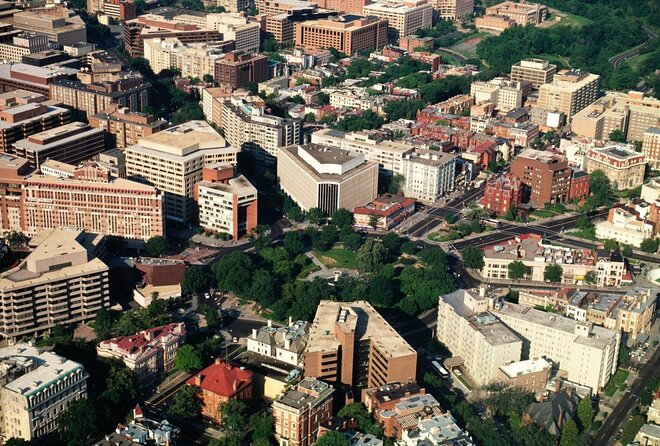
Dupont Circle’s grand houses tell a story of Washington before they became embassies: this was the address of industrial fortunes, political influence, and social ambition. I like that the tour links architectural details to the people who lived behind the facades, and that it introduces quieter corners such as the Spanish Steps along the way.
I also like the small-group format, capped at 20, and the lively storytelling guests have praised from guides including Sam, Natalie, and Christine. One consideration: this is a walking tour, not an embassy-insider visit. You should plan on seeing buildings from the street, and allow a little extra time because the route can run longer than two hours.
- Dupont Circle sets the scene: Start at the fountain before tracing the neighborhood’s change from fashionable residential district to embassy corridor.
- Embassy Row mixes styles and stories: Look for Neo-classical, Beaux-Arts, and Queen Anne details among the imposing homes.
- Washington’s social history gets personal: Hear about figures such as Alice Roosevelt Longworth, Evalyn Walsh McLean, and the Hope Diamond.
- Kalorama adds a quieter stretch: The route leaves the main avenue for a residential area whose name means beautiful view in Greek.
- The walk ends near the Phillips Collection: You see the museum’s red-brick exterior, but museum admission is not part of the tour.
- Budget about $48 and two hours: The guide is included, the maximum group size is 20, and the tour is offered in English.
Why Dupont Circle’s Mansions Tell a Washington Story
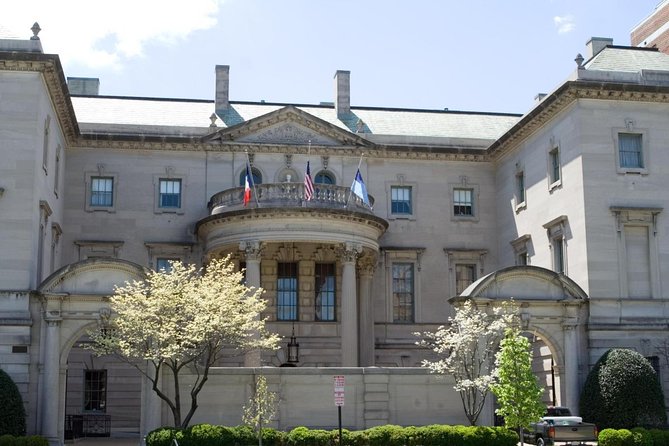
This walk is not a parade of pretty buildings with dates attached. Its best idea is that architecture can explain who had money, who wanted influence, and how Washington’s social map changed over time. Along Massachusetts Avenue, private homes built to impress later took on new lives as embassies, clubs, and offices.
That shift gives the route a useful focus. You see residences that once belonged to wealthy and politically connected families, then learn how their grand rooms and formal facades became part of the city’s diplomatic life. The buildings remain the main attraction, but the stories help you read them.
The tour also keeps the subject approachable. You do not need to know the difference between Beaux-Arts and Queen Anne before you arrive. Guides explain what to look for, then connect the style to the people and ambitions behind it. Several guides, including Sam, Mark, Christine, Natalie, and Carolyn, have been praised for mixing architectural explanation with humor and personal stories.
Starting at Dupont Circle
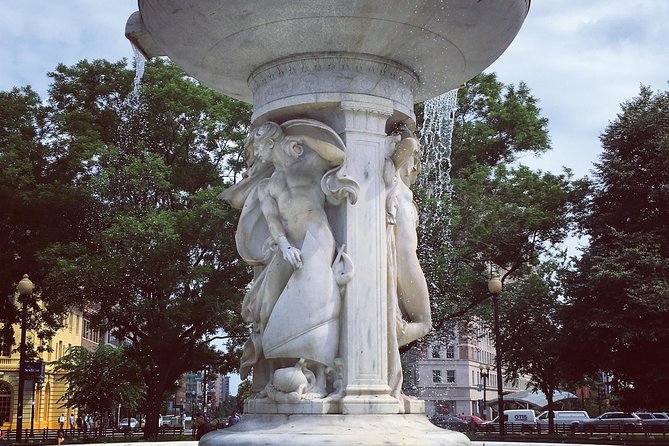
The meeting point is Dupont Circle, a natural place to begin because it gives you a quick sense of the neighborhood’s scale and layout. The fountain at the center was designed by the designers of the Lincoln Memorial, and the circle serves as a busy local hub as well as a handsome landmark.
You spend about 10 minutes here. That is enough to take in the fountain and get a short introduction to why the circle was established and named. This opening context matters: once you understand the neighborhood’s early identity, the mansions along Embassy Row make more sense as expressions of status and social competition.
The tour is fully narrated, so you are not left to guess at the significance of a facade. The pace is designed for walking and listening, with stops along the route rather than long indoor visits. If you like to take photos, expect to pause often, but keep in mind that the group will continue on after each stop.
More walking tours around Washington DC:
- Arlington National Cemetery Walking Tour & Changing of the Guards
★ 5.0 · 2,566 reviews - DC: Hop-On Hop-Off with 17 Stops plus Arlington Walking Tour
★ 4.1 · 2,238 reviews - Ghosts of Georgetown & The Exorcist Steps Walking Tour
★ 5.0 · 610 reviews
Reading the Houses Along Embassy Row
The longest portion of the outing is about an hour on Embassy Row. Here, the architecture shifts from one grand style to another, including Neo-classical, Beaux-Arts, and Queen Anne. The variety is part of the pleasure: you can compare the buildings as you walk, rather than seeing one isolated mansion and moving on.
The route passes the James Blaine Mansion, the Embassy of Indonesia, the Cosmos Club, the Society of Cincinnati, and embassies including Latvia and Turkey. It also takes in the Embassy of Cameroon and Sheridan Circle. These are working institutions and private properties, so the experience is primarily about seeing them from the street and hearing their stories, not touring their interiors.
A central theme is the people who made this stretch fashionable. Washington’s wealthy families and political elite built lavish homes here to display their place in society. Later, as fortunes and circumstances changed, many mansions found new uses. That makes the neighborhood a compact lesson in how a capital city adapts old prestige to new purposes.
The stories can be more memorable than the architectural vocabulary. Alice Roosevelt Longworth, known for her social influence, and Evalyn Walsh McLean, associated with the Hope Diamond, help give the street a cast of vivid characters. The Indonesian Embassy is especially notable for its connection to the Hope Diamond: the building was once home to the famous stone.
The appeal is not that every stop offers a dramatic view from every angle. Some facades are best appreciated with a guide pointing out their details and history. That is where a narrated walk earns its keep: you notice features you might otherwise pass, and the stories give the buildings a human scale.
Anderson House and the People Behind the Facades
Anderson House is one of the route’s most imposing stops. It was the home of one of Washington’s wealthiest power couples and is now the headquarters of the Society of Cincinnati, described as the nation’s oldest patriotic organization. Even from outside, the mansion makes clear that its original owners wanted their residence to command attention.
The guide’s account helps connect the house to the larger story of Washington society. These were not simply comfortable homes. Their size and design reflected wealth, status, and a desire to shape the city’s social world. The tour’s strength is in making that ambition legible without requiring you to study architectural history in advance.
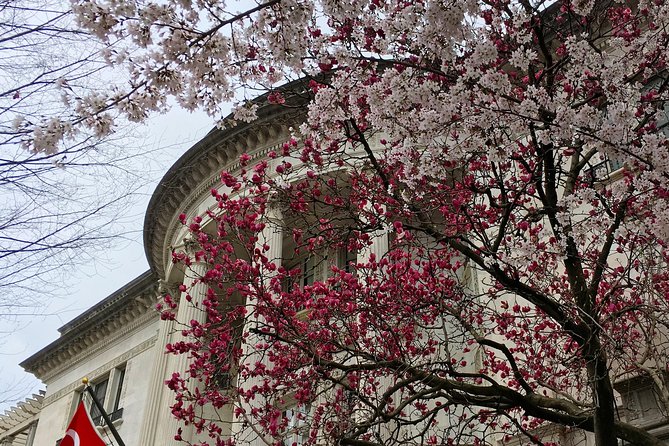
At the Residence of the Turkish Ambassador, you see a Beaux-Arts mansion near Sheridan Circle. The building also has a musical connection: Ahmet Ertegun, the music executive, got his start there. That kind of detail keeps the route from becoming a string of style labels. A building can be a diplomatic residence and part of a personal story at the same time.
Sheridan Circle and a Shift Into Kalorama
Sheridan Circle brings together a Civil War monument and a story described as having an unusual backstory. The monument was designed by the sculptor of Mount Rushmore, a detail that gives this brief stop an unexpected connection to a much more famous landmark.
From there, the route heads toward Kalorama, a residential neighborhood whose name means beautiful view in Greek. You spend about 15 minutes here, away from the main stretch of Embassy Row. The change in atmosphere is welcome: the walk becomes less about one grand avenue and more about the residential character of the surrounding area.
Kalorama is now home to some of Washington’s influential residents. The tour’s value here lies in the contrast between a quiet neighborhood setting and the people and institutions associated with the area. It also gives your feet a change of scenery before the final landmarks.
More Washington DC tours around Washington DC:
- DC Memorials Night Tour: Glass-Roof Convertible Upgrade Option
★ 4.5 · 6,933 reviews - National Mall Monuments Night Tour with 10+ Stops, Entry Tickets
★ 4.5 · 4,863 reviews - Washington DC Monuments by Moonlight Tour by Trolley
★ 4.5 · 3,956 reviews - Hop-on Hop-off Sightseeing Tour by Open-top Bus with 18 Stops
★ 3.5 · 3,848 reviews
Woodrow Wilson’s Home and the Spanish Steps
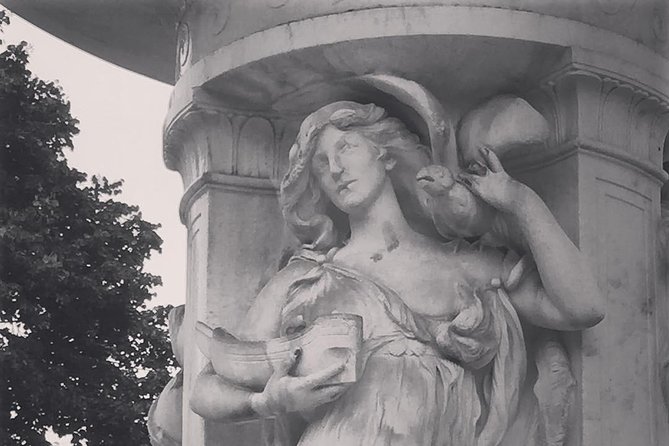
The former home of President Woodrow Wilson marks another connection between Washington’s political life and its residential streets. Wilson lived here after his presidency. Admission to the house is not included, so treat this as a stop for exterior context rather than a visit inside.
Next come Washington’s Spanish Steps, a modest local version of the celebrated European landmark. They offer a quieter pause within the city and are easy to miss if you stick to the major avenues. This is one of the route’s more appealing surprises: the tour includes not only monumental homes but also small places that reveal a more intimate side of the neighborhood.
The route also passes Mitchell Park and the spot known as the Hobbit House, where Edward Lind Morse painted his inventor father. These details add texture to the walk, though the tour’s central focus remains architecture and the history of the people who lived in the area.
Finishing Near the Phillips Collection
The final listed stop is the Phillips Collection, identified as the first modern art museum in the United States. You see its red-brick exterior, then the tour reaches its stated endpoint at the museum on 21st Street NW.
There is one practical detail to clarify before you set out: the tour description also says the walk re-enters Dupont Circle to conclude, while the stated end point is the Phillips Collection. Since those are not the same location, check your meeting instructions for the exact finish. In either case, the Phillips is a useful place to continue your day if you want to explore the museum, but museum admission is not included in the walking tour.
What Two Hours and $48 Get You
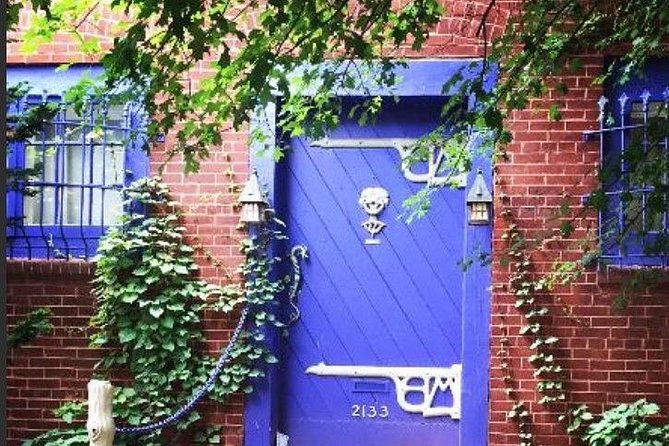
At $48 per person, this tour is best understood as a guided neighborhood walk rather than a ticketed attraction. You are paying for a local guide, a small group, and a well-organized thread through a district where the buildings are interesting but their stories are easy to miss on your own.
The guide is included, and the group is capped at 20 people. That is small enough to make it easier to hear the narration and ask questions, though it is not a private tour. The tour is offered in English and uses a mobile ticket.
The scheduled duration is about two hours. Give yourself a flexible finish, though: one account of the walk put it at about two hours and 20 minutes. The route includes several short stops and a longer hour on Embassy Row, so it is an active outing but not an especially strenuous one according to the information provided. Most people can participate, service animals are allowed, and the meeting point is near public transportation.
The tour is popular enough that it is booked an average of 22 days ahead. If your schedule is fixed, booking early is sensible. There is free cancellation up to 24 hours before the start time; changes or cancellations inside that window are not accepted for a refund. The operator may also cancel if the minimum number of participants is not met, in which case you are offered another date or experience, or a refund.
Who Will Get the Most From This Walk
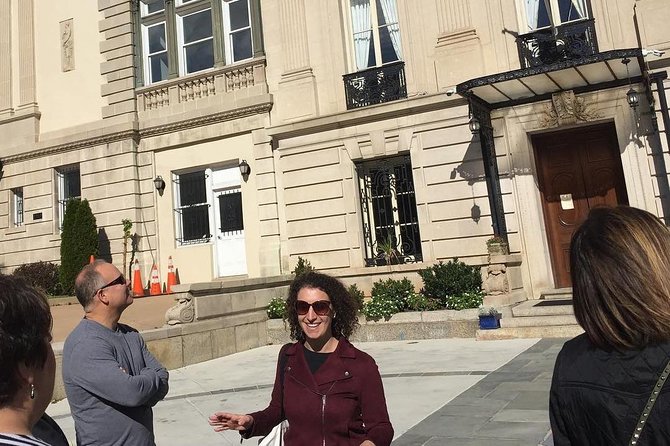
I’d choose this tour if you enjoy city walks with a strong mix of architecture, social history, and memorable characters. It works particularly well if you have already seen the major monuments and want to understand a different side of Washington, one shaped by private wealth, diplomacy, and neighborhood life.
It can also suit local residents. The route gives you a reason to look more closely at familiar streets, and the focus on embassy culture adds a new angle even if you know the city. Families have taken the tour with children and teens, and the storytelling format can make architectural details easier to follow than a lecture-heavy visit.
This is less suitable if you want to go inside several embassies or tour the Woodrow Wilson House as part of the price. The route passes important buildings, but access to interiors is not promised, and the Wilson House admission is not included. If indoor collections are your priority, plan a separate Phillips Collection visit.
Should You Book the Dupont Circle and Embassy Row Tour?
For $48, I’d book this if you want a guided introduction to one of Washington’s most striking residential districts. The strongest reasons are the blend of mansion architecture and personal stories, the local guide’s narration, and the quieter stops that make the route feel more varied than a straight walk down Massachusetts Avenue.
Go with realistic expectations: you are seeing the neighborhood from the outside, walking for roughly two hours, and paying for interpretation rather than entry to attractions. Bring comfortable walking shoes, leave time in your schedule in case the tour runs long, and check the precise end point before booking. If those terms suit you, this is a good-value way to make Embassy Row more than a succession of impressive facades.
FAQ
How long is the Dupont Circle and Embassy Row tour?
The tour lasts about two hours. Allow extra time, since one outing took about two hours and 20 minutes.
How much does the tour cost?
The listed price is $48 per person. A local guide is included.
Where does the tour start?
The stated meeting point is Dupont Circle, Washington, DC 20036.
Where does the tour end?
The Phillips Collection at 1600 21st Street NW is listed as the end point. The description also says the walk concludes after re-entering Dupont Circle, so check your tour instructions for the exact finish.
Is the tour offered in English?
Yes. English is the listed language.
How large is the group?
The maximum group size is 20 travelers.
Are admission tickets included?
The tour includes a local guide, but admission to the Woodrow Wilson House is not included. The Phillips Collection is visited from the outside, and museum admission is not listed as included.
Can I cancel for a refund?
You can cancel for a full refund up to 24 hours before the experience starts. Cancellations or changes made less than 24 hours before the start time are not accepted for a refund.
New on the list in Washington DC
- Washington, DC: Thanksgiving Day Lunch Cruise★ 4.7 · 3 reviews
- White House at Night: Scandals & Murder Adults Only Tour★ 4.5 · 4 reviews
- Washington DC: Private Custom Tour with a Local Guide★ 4.9 · 4 reviews
- Washington Monument Ticket & National Mall Memorials Tour★ 5.0 · 16 reviews
- Washington DC: Highlights Guided Walking Tour★ 4.6 · 6 reviews
- Thomas Jefferson Monticello Small Group Day Tour from DC★ 4.8 · 16 reviews
- Washington: Mt. Vernon, Alexandria & Arlington Cemetery Tour★ 3.4 · 8 reviews
- Washington, DC: The Good Liar: Brian Curry★ 5.0 · 3 reviews
Washington DC Walking Tours, compared.

Arlington National Cemetery Walking Tour & Changing of the Guards
Read our review →
Hop-On Hop-Off with 17 Stops plus Arlington Walking Tour
Read our review →
Ghosts of Georgetown & The Exorcist Steps Walking Tour
Read our review →
Georgetown Foodie Culinary Tour & Neighborhood Walk
Read our review →

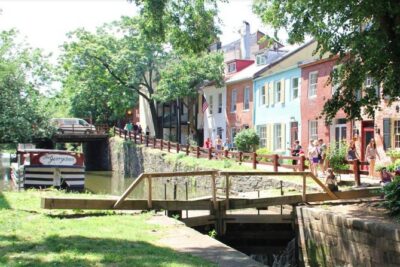
Historic Georgetown: History, Gossip, & Architecture Walking Tour
Read our review →
Smithsonian Museums Walking Tour with Reserved Air & Space Entry
Read our review →Browse the lists this tour appears in