
Reviewed · WASHINGTON DC
Embassy Row Spy History Tour with a Former CIA Officer
A suspicious death at the Dupont Circle Hotel is one of the stories that opens this Washington walk. From there, you’ll connect the city’s streets and landmarks with espionage, political violence, and the practical mechanics of covert communication. The tour ends where it began, with you trying a signal and dead-drop exercise yourself.
I like two things in particular: the chance to hear spy history from a former CIA officer, and the shift from listening to taking part in a simple communication exercise. One consideration is the price: $75 for about 90 minutes is a premium for a short walking tour, so it makes the most sense if spy history is a strong interest.
Key points to know before you book
- The tour starts at the Dupont Memorial: You meet at the Rear Admiral Samuel Francis Dupont Memorial in Washington, DC, and return there at the end.
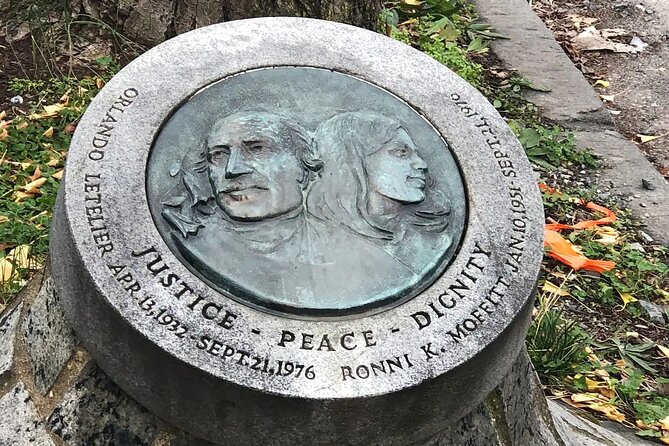
- The stories move from early America to the Cold War era: Stops cover Revolutionary War spy activity, a suspicious death at the Dupont Circle Hotel, and Orlando Letelier’s assassination at Sheridan Circle.
- You get to try a dead drop: The guide leads an exercise in spotting a signal and retrieving a message, giving the subject a practical, hands-on turn.
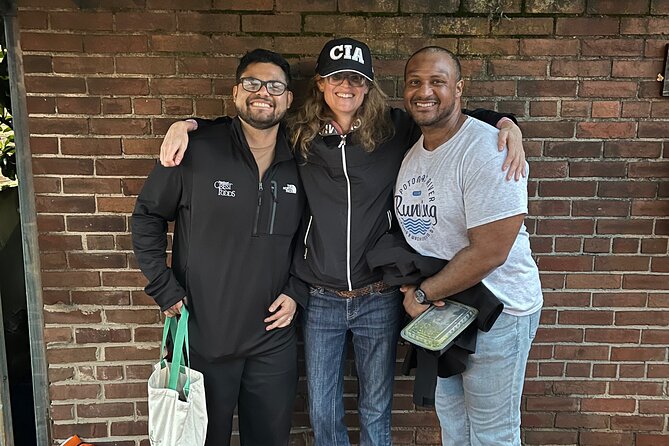
- A former CIA officer leads the tour: Rosanna is a guide associated with the experience, but the guide for your specific date is not guaranteed.
- The group is capped at 25: That limit helps keep a walking discussion manageable, though it is not a private tour.
- Plan for an outdoor walk: The tour lasts about 90 minutes, requires moderate physical fitness, and may be canceled for poor weather or if the minimum group size is not met.
Spy stories rooted in Dupont Circle
This is a walking tour built around stories, not a museum visit or a tour of embassy interiors. You meet at the Dupont Memorial, then hear about events and spy activity connected to the surrounding area. That setting is part of the appeal: the history is tied to actual Washington streets and landmarks rather than presented only as dates and names.
The opening subject is a suspicious death at the Dupont Circle Hotel. The tour information does not identify the person or spell out the circumstances, so go in expecting a story and discussion rather than a full case file. That restraint may suit visitors who enjoy mysteries and unanswered questions. If you want precise detail about the case, ask your guide what can be shared as you go.
I find this sort of opening useful because it sets the tone. Espionage history is often less tidy than a film plot. A suspicious death can raise questions about motive and evidence, but a tour stop cannot necessarily settle them. Listen for what is known, what is inferred, and where uncertainty remains.
The walk also takes in Embassy Row history, though the named stops in the route are not a tour of embassy buildings. Don’t book expecting access inside diplomatic compounds or a list of embassy interiors. The focus is the spy story attached to the city, with the street itself providing the backdrop.
More history tours around Washington DC:
- Guided African American History Tour with Reserved Museum Entry
★ 4.5 · 1,180 reviews - DC Monuments & History Guided E-Cart Tour-Blankets
★ 4.5 · 450 reviews - Smithsonian Museum of Natural History – Exclusive Guided Tour
★ 5.0 · 446 reviews
From Revolutionary War spies to CIA tradition
One stop reaches back to spy activity during the Revolutionary War. That gives the tour a longer timeline than a Cold War-only walk, and it places intelligence work in the context of America’s founding period. The available details do not specify which people or operations are discussed, so you should expect the guide to supply the names and examples on the day.
The tour also covers a tradition among CIA officers before they deploy. The exact tradition is not described in advance, which leaves room for the guide to explain it in person. If you are curious about the distinction between a formal agency practice and an informal custom, this is a good place to ask. The former officer’s perspective is a central reason to choose this walk, though the subject matter does not mean you should expect classified disclosures.
That point matters when you set expectations. A former CIA officer can bring professional context to the discussion, but the tour is still a public history experience. The value is in hearing how intelligence work is framed by someone with relevant experience, not in expecting secret files or operational instruction.
Rosanna is a named guide connected with the tour. If meeting her is important to you, check with the operator before booking, since the guide assigned to your date is not stated. The guide’s manner matters here: the subjects include political violence, covert work, and unresolved questions, so a clear, engaging storyteller can make a short walk feel substantial.
Sheridan Circle and the assassination of Orlando Letelier
At Sheridan Circle, the tour discusses the assassination of Orlando Letelier. It is a grave subject, and the location gives the story a direct connection to Washington’s public streets. The tour information does not provide further details about the circumstances or the broader political history covered, so let your guide establish the context rather than arriving with assumptions about how much time will be spent on each part.
For visitors interested in modern political history, this stop may be one of the most significant. It shifts the tour from the mechanics of spying to the consequences of political violence. That change of tone is worth keeping in mind, particularly if you are bringing children or prefer lighter sightseeing.
Sheridan Circle also helps explain why a spy-history walk can offer something different from a general monument tour. Washington’s grand public spaces are often presented through presidents, architecture, and government. This experience focuses instead on less visible stories tied to the city’s diplomatic and intelligence history. You will still be outdoors in a familiar urban setting, but the guide asks you to read it through a different lens.
Try an impersonal message and dead drop
The most hands-on part is an exercise in impersonal communication. You’ll try to spot a signal and unload a dead drop, a simple activity that turns an abstract spy technique into something you can attempt. The tour description does not give the precise setup or location, so expect the guide to explain the rules when you reach that part.
I like this element because it gives you a change of pace. A 90-minute history walk can become a string of names and events if you only listen. Trying a task yourself gives you a small sense of the attention and observation the topic involves, without suggesting that a short exercise can reproduce real intelligence work.
Keep your expectations modest: this is an interactive demonstration, not a training course. You are there to test your eye for a signal and take part in the dead-drop activity, not to learn operational tradecraft. For most visitors, that is the right balance. It adds a memorable moment without taking over the historical discussion.
More Washington DC tours around Washington DC:
- DC Memorials Night Tour: Glass-Roof Convertible Upgrade Option
★ 4.5 · 6,933 reviews - National Mall Monuments Night Tour with 10+ Stops, Entry Tickets
★ 4.5 · 4,863 reviews - Washington DC Monuments by Moonlight Tour by Trolley
★ 4.5 · 3,956 reviews - Hop-on Hop-off Sightseeing Tour by Open-top Bus with 18 Stops
★ 3.5 · 3,848 reviews
Is $75 fair value for 90 minutes?
At $75 per person, this is not a bargain-priced city walk. The fee includes all fees and taxes, but bottled water is not included. You are paying for a specialist subject and a guide with former CIA experience, not for a long itinerary or a set of included refreshments.
The value depends on your interests. If you already enjoy spy history, intelligence work, or Washington’s diplomatic past, the combination of stories and a practical exercise may justify the cost. If you are mainly looking for broad sightseeing or a tour of famous monuments, you may get more for your money from a longer general city walk.
The group limit of 25 is a useful detail. It is small enough to put the guide within reach for questions, but large enough that you may share the walk with a sizeable group. The tour is not described as private, and a cap of 25 does not guarantee an intimate conversation. If you prefer a one-to-one exchange with the guide, this may not be the right format.
The tour is about 90 minutes, a manageable length for fitting into a day of sightseeing. You will need a moderate level of physical fitness, and the experience takes place outdoors. Wear shoes suited to walking and bring your own water, since bottled water is not provided. Those are simple preparations, but they matter more on a cold or warm day.
Meeting point, weather, and cancellation details
The tour begins at the Rear Admiral Samuel Francis Dupont Memorial, Washington, DC 20009, and ends back at the same meeting point. It is near public transportation, which should help you plan your route to the start. The activity is offered in English, and you receive a mobile ticket.
Booking confirmation is provided at the time of booking. The tour is usually booked about 14 days ahead, so if your schedule is fixed, it is sensible to plan early rather than count on a last-minute place. The maximum group size is 25.
Service animals are allowed. The stated physical requirement is moderate fitness, so consider whether an outdoor walk of about 90 minutes suits you. The tour requires good weather and a minimum number of participants. If the operator cancels for poor weather or because the minimum is not met, you are offered another date or a full refund.
You can cancel for a full refund up to 24 hours before the start time. A cancellation or change made less than 24 hours before the experience is not accepted for a refund or change. Keep in mind that the cut-off follows the tour’s local time.
Who should book this Washington spy walk?
This tour suits you best if you want a focused subject, enjoy walking discussions, and are curious about the overlap between intelligence work and Washington history. The former CIA officer’s perspective and the dead-drop exercise give it a different feel from a standard neighborhood stroll. It also fits neatly into a day because it lasts about an hour and a half and returns to its starting point.
You may want to skip it if you are looking for a broad overview of the city, a long tour, or access to embassy interiors. The route’s appeal lies in its specific stories: a suspicious death at the Dupont Circle Hotel, early American espionage, a CIA tradition, and the assassination of Orlando Letelier. Some details are not supplied before the walk, so part of the experience is hearing the guide’s explanation on site.
My call: Book if spy history is a real interest and you value a guide with relevant professional experience. At $75, it is a specialist outing rather than an all-purpose sightseeing deal. Bring water, dress for the weather, and reserve ahead if you have a particular date in mind.
FAQ
How long is the tour?
It lasts about 1 hour and 30 minutes.
How much does it cost?
The listed price is $75 per person. All fees and taxes are included.
Where does the tour start?
It starts at the Rear Admiral Samuel Francis Dupont Memorial in Washington, DC 20009.
Where does the tour end?
It ends back at the meeting point.
What language is the tour offered in?
The tour is offered in English.
Is the tour led by a former CIA officer?
Yes. The experience is described as a spy history tour with a former CIA officer.
How many people can join?
The maximum group size is 25 travelers.
Is bottled water included?
No. Bottled water is not included.
What happens if the tour is canceled because of weather or group size?
If it is canceled because of poor weather or because the minimum number of participants is not met, you are offered a different date or a full refund.
New on the list in Washington DC
- Washington, DC: Thanksgiving Day Lunch Cruise★ 4.7 · 3 reviews
- White House at Night: Scandals & Murder Adults Only Tour★ 4.5 · 4 reviews
- Washington Monument Ticket & National Mall Memorials Tour★ 5.0 · 16 reviews
- Washington DC: Private Custom Tour with a Local Guide★ 4.9 · 4 reviews
- Washington DC: Highlights Guided Walking Tour★ 4.6 · 6 reviews
- Thomas Jefferson Monticello Small Group Day Tour from DC★ 4.8 · 16 reviews
- Washington: Mt. Vernon, Alexandria & Arlington Cemetery Tour★ 3.4 · 8 reviews
- Washington, DC: The Good Liar: Brian Curry★ 5.0 · 3 reviews