
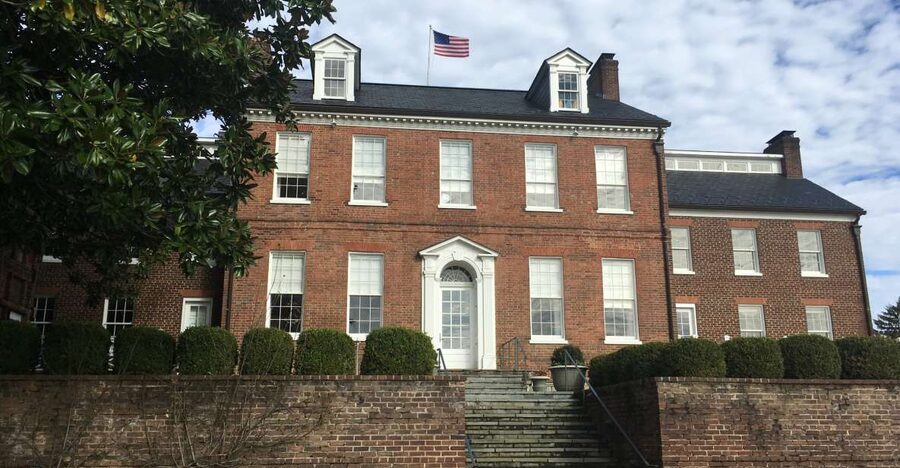
Reviewed · WASHINGTON DC WALKING TOURS
Washington, DC: Georgetown Architecture Walking Tour
Georgetown’s story is written into its buildings: a canal built to move goods, homes tied to the neighborhood’s rise, and grand academic buildings set among familiar streets. This 2.5-hour walk links those sights into a clear account of how Georgetown changed, rather than treating its architecture as a collection of pretty façades.
I like two things in particular: the route moves from the C&O Canal through residential streets and on to Georgetown’s academic landmarks, and the guide gives you context for places you could easily pass without noticing. The pace is described as leisurely, with about 2 miles of walking.
One consideration is that 150 minutes on foot asks for comfortable shoes and weather-ready clothing. The walk goes rain or shine unless conditions are dangerous, and one past participant suggested allowing a little more time for photos, so don’t count on a long pause at every stop.
Key points
- The route has a satisfying arc: Start at the C&O Canal, pass historic homes and churches, then finish by Georgetown’s campus and waterfront.
- Small details get a story: Hear about the Grafton Tyler Double House, Pomander Walk, and Alexander Graham Bell’s Volta Laboratory.
- The architecture comes with social history: The tour connects Georgetown’s early trade with its later reputation as an elite neighborhood.
- You’ll see more than houses: Churches, a girls’ school, Georgetown University buildings, a former streetcar depot, and a waterfront all feature.
- Plan for two miles and 150 minutes: Bring water, wear comfortable shoes, and arrive five minutes early at Baked & Wired.
- The price is $43 per person: A guide’s commentary is the main added value over walking the same streets on your own.
From Baked & Wired to Georgetown’s early story
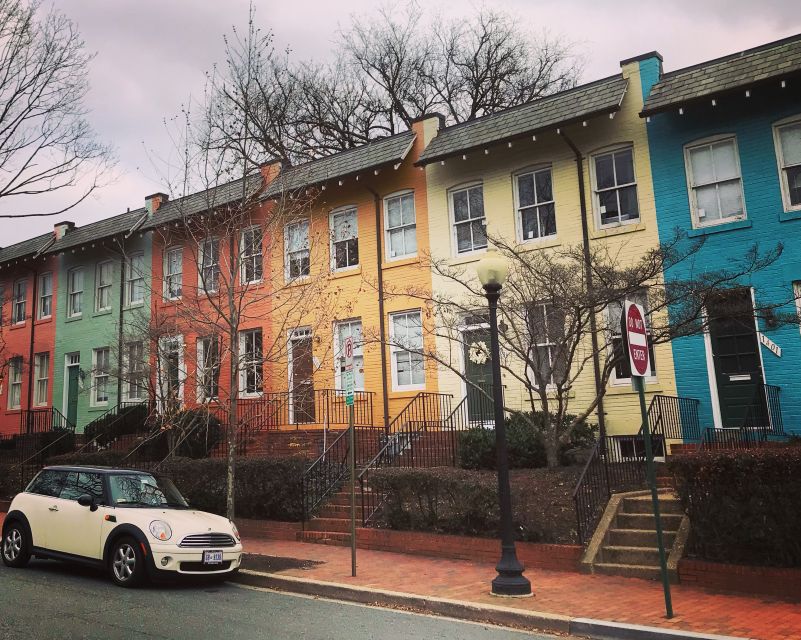
Meet your guide outside Baked & Wired, a centrally located Georgetown meeting point. Look for a DC Design Tour T-shirt and arrive five minutes before departure. The tour leaves on time, so don’t make your coffee run the last stop before the walk.
A local guide leads the route in English. Sam and Ellyn have led past tours, but the guide you meet may be someone else. That matters because this walk depends on the person connecting the buildings to the neighborhood’s past. The stops are interesting in themselves, but the stories are what help you see why they belong together.
The tour is billed as leisurely, which suits a neighborhood walk. You’ll cover about 2 miles over 150 minutes, with stops along the way. That is not a strenuous hike, but the time on your feet adds up. Wear shoes you’re happy to walk in and bring water.
More Georgetown tours around Washington DC:
- Ghosts of Georgetown & The Exorcist Steps Walking Tour
★ 5.0 · 610 reviews - Georgetown Foodie Culinary Tour & Neighborhood Walk
★ 5.0 · 437 reviews - Gastronomic Georgetown Walking Food Tour
★ 4.5 · 373 reviews
The C&O Canal and Georgetown’s trading roots
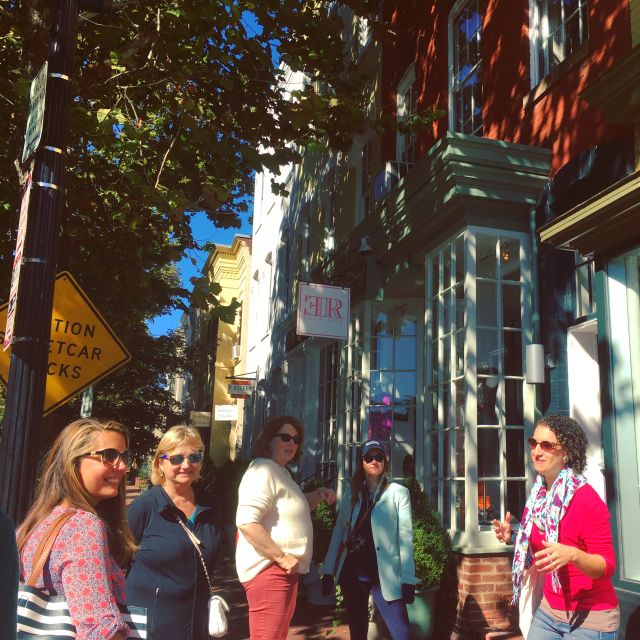
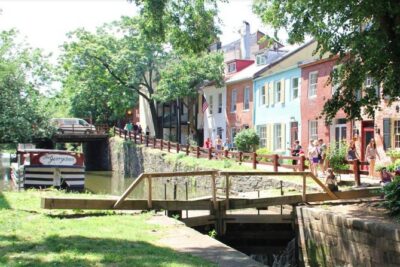
The walk begins with the Chesapeake and Ohio Canal, a practical piece of infrastructure with a bigger role in Georgetown’s growth. The canal connected communities along the Potomac River with markets and goods. That simple function gives you a useful starting point: Georgetown’s story begins not with university life or elegant homes, but with trade and transport.
This context makes the later stops more legible. As you move from the canal into residential streets, you’ll hear how a working river community developed into a wealthy and fashionable address. The tour’s rags-to-riches thread is a helpful way to understand the changes in the neighborhood without reducing it to a timeline of dates.
The canal is also a good reminder to look beyond the most polished façades. Georgetown’s appeal comes from different layers of history sitting close together. Your guide can point out how the neighborhood’s built environment reflects those shifts, while you get a sense of how its streets connect.
Historic homes, a seminary, and a double house
From the canal, the route passes the Laird-Dunlop House and Newton D. Baker House. The names may not mean much before the tour, but the buildings give the guide a chance to explain the people and periods associated with Georgetown’s residential history. You’re not just looking at old houses; you’re hearing how the neighborhood’s status and residents changed over time.
The Lydia English Seminary School for Girls adds a different angle. It was a boarding school that served the upper class, a detail that makes education part of Georgetown’s social history as well as its architecture. Seeing a school in the middle of a residential route helps broaden the picture of how the neighborhood functioned.
You’ll also hear the story of the Grafton Tyler Double House. Its name alone hints that the building has a specific architectural feature worth explaining, though the experience is most useful when you let the guide unpack the details on site. This is one reason a guided walk can add value: you may notice the structure, but miss the reason it stands out from nearby homes.
The tour’s strength is its range. It doesn’t confine itself to the grandest buildings or the most famous names. Instead, it brings together houses, schools, churches, and public landmarks to show how a neighborhood is made from many kinds of places.
Churches, schools, and the Yellow Tavern
Christ Episcopal Church and Hyde-Addison School offer two more stops that help fill in Georgetown’s everyday civic life. A church and a school are not simply decorative breaks between homes. They show the institutions that served local residents and shaped the character of the neighborhood.
The historic Yellow Tavern, also called the White Horse Tavern, adds a more social note. The two names are a useful detail to listen for, and the stop gives the route a change of pace from houses and academic buildings. You’ll hear the story behind the tavern rather than just pass its exterior.
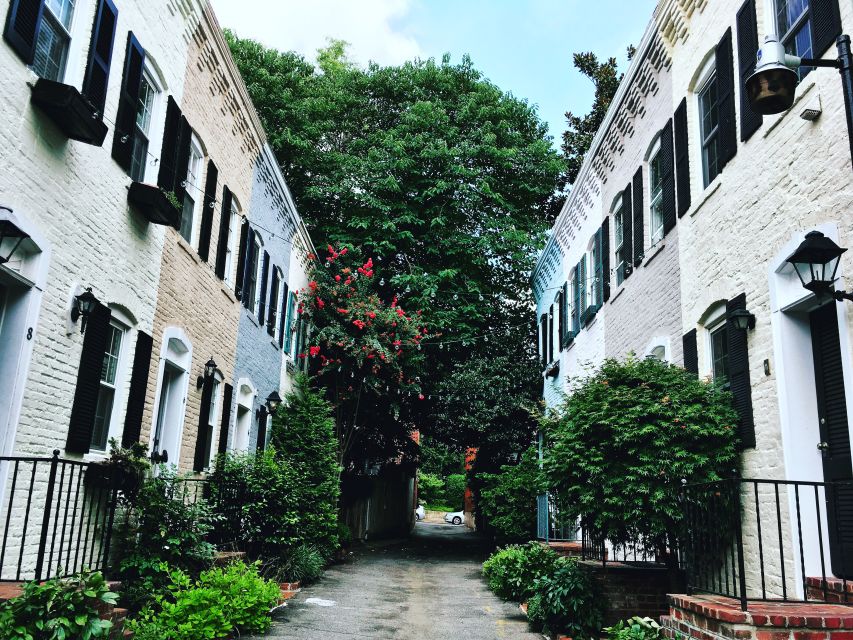
Then the route follows Pomander Walk, a short passage lined with tiny pastel row houses. It is one of the most distinctive parts of the walk because the scale and color contrast with the larger historic homes elsewhere on the route. It’s also a natural place to pause and take in the details.
A practical note: the tour keeps moving through a lot of stops, and you may want photos. One past participant suggested allowing a few extra minutes for pictures. You can take shots as you go, but if you like to frame each building carefully, be prepared to move promptly when the group does.
More walking tours around Washington DC:
- Arlington National Cemetery Walking Tour & Changing of the Guards
★ 5.0 · 2,566 reviews - DC: Hop-On Hop-Off with 17 Stops plus Arlington Walking Tour
★ 4.1 · 2,238 reviews - Ghosts of D.C. – Walking Tour
★ 4.5 · 344 reviews - Historic Georgetown: History, Gossip, & Architecture Walking Tour
★ 5.0 · 321 reviews
Volta Laboratory and Georgetown’s academic quarter
The route next points to the place where Alexander Graham Bell founded Volta Laboratory. The name connects Georgetown’s street-level history to a figure associated with invention and research. It is a useful reminder that the neighborhood’s story is not only about money, religion, and schools.
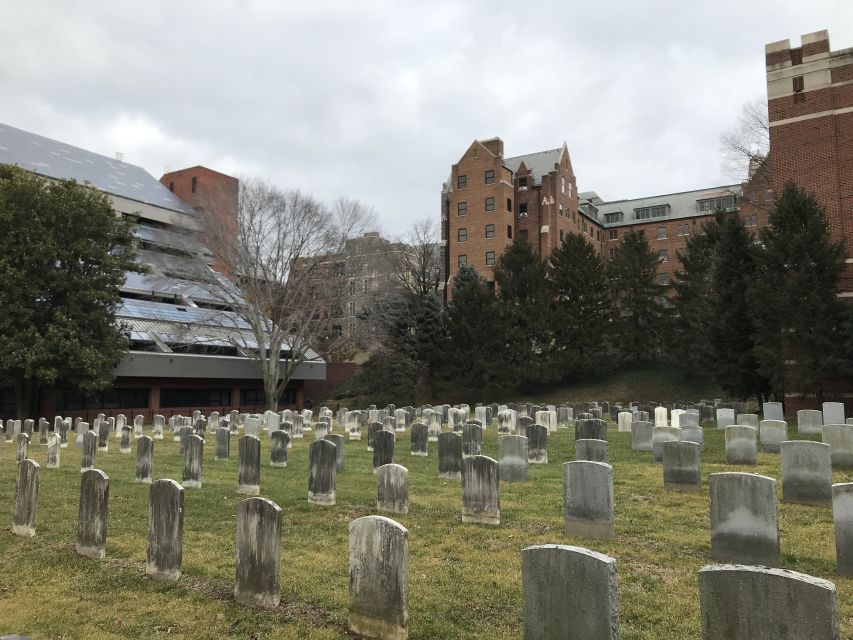
From there, the tour takes in Georgetown Preparatory School, Healy Hall, and the University Library. These academic destinations give the walk a different visual and historical scale. Instead of focusing on individual homes, you’re looking at institutions whose presence has helped define Georgetown’s identity.
Healy Hall and the University Library are particularly useful stops for travelers deciding whether this tour fits their interests. If you enjoy architecture in the context of education and institutional life, you’ll get more from the route than you would on a walk devoted only to residential façades. If you’re mainly looking for interiors, however, the experience is a walking tour of exterior landmarks, not a campus visit with access to buildings promised.
The Tombs offers a glimpse of campus nightlife and rounds out the university section with a more informal setting. It helps show that Georgetown is not just a place to study or admire old buildings. The tour moves between formal academic institutions and the social life around them.
The Car Barn, Cady’s Alley, and the waterfront finish
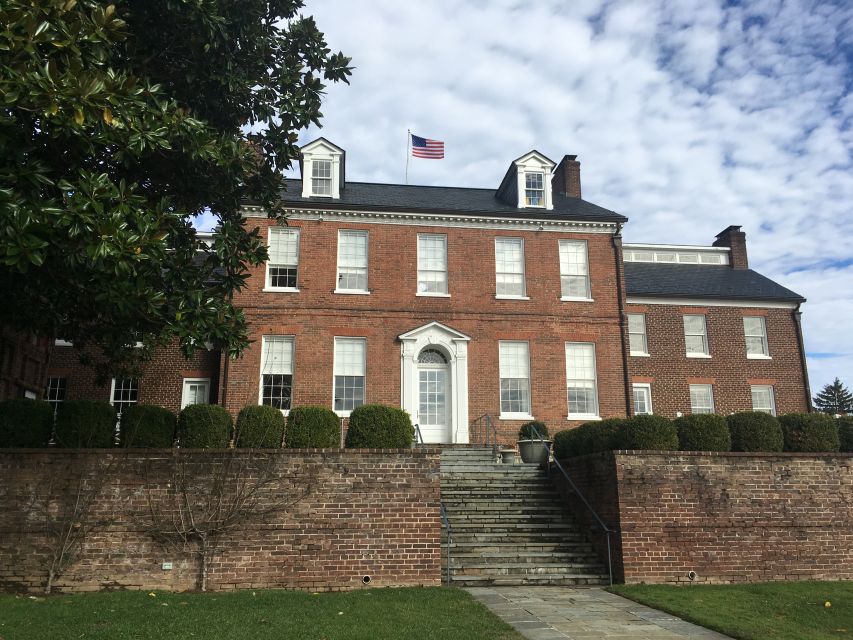
The Car Barn is a renovated streetcar depot, a stop that brings transport history back into the story after the canal. Its change of use is the point: Georgetown’s buildings have served different roles as the neighborhood evolved. That kind of adaptation is often easier to appreciate when a guide explains what a structure used to be.
The Francis Scott Key Memorial and Cady’s Alley lead you toward the final stretch. Together, they provide a transition from the historic streets and campus area to Georgetown’s waterfront. The exact feel of this section depends on the group’s pace and the time spent at earlier stops, but the route has a clear destination rather than ending back where it began.
The tour concludes at the Georgetown Waterfront. That finish makes practical sense after a walk through the neighborhood: you can continue exploring the area or simply take a break after two and a half hours on foot. Since the start and finish are different places, plan your next stop around the waterfront rather than assuming you’ll return to Baked & Wired with the guide.
What $43 buys you
At $43 per person, this is a paid guided walk rather than a transportation or attraction package. The included service is a professional local guide, and the value lies in the interpretation: names, buildings, and architectural features become part of a connected account of Georgetown’s development.
The 150-minute duration works out to roughly $17.20 per hour. That is a reasonable way to think about the price if you want an organized introduction to the neighborhood and would otherwise spend time researching the stops yourself. You can walk these streets independently, but you would need to do your own homework to understand why the canal, seminary, double house, church, school, laboratory, and university buildings belong in the same story.
The strongest element is the guide-led history. Past participants have singled out engaging storytelling and fun facts, with Sam and Ellyn among the guides named. Those accounts also support a practical expectation: the guide can bring out information a self-guided walk might miss. Still, the quality of any guided tour depends in part on the person leading it, and no particular guide is guaranteed.
The trade-off is flexibility. A scheduled group walk sets the pace, and you may not get as much time for photographs or lingering as you would on your own. If your priority is to explore a single building in depth or spend a long time on campus, a self-guided visit may suit you better. If you want a broad introduction across several parts of Georgetown, the route makes good use of the time.
Who will get the most from this walk
This tour suits first-time visitors who want to understand Georgetown beyond its famous reputation. You’ll get a varied introduction to homes, churches, schools, university buildings, transport history, and the waterfront without having to plan a route yourself.
It also works well for architecture fans who care about how buildings relate to a neighborhood’s social history. You don’t need to know the names in advance. The guide supplies the context, and the mix of structures keeps the walk from becoming a long parade of similar façades.
You may prefer a different plan if you dislike walking for extended periods, want an indoor experience, or like to stop for photos at length. The route covers about 2 miles, and the tour runs in rain or shine unless conditions are dangerous. Check the forecast, dress for the weather, and bring water.
Should you book the Georgetown Architecture Walking Tour?
Book it if you want a grounded introduction to Georgetown, especially if you value stories about how the neighborhood developed as much as the buildings themselves. The canal-to-campus route, its varied stops, and the guide’s local perspective make this more useful than a casual stroll with no plan.
Skip it if you need a highly flexible schedule or want guaranteed long photo stops. At $43, you’re paying for a guided account of the neighborhood, not entry to interiors or a private exploration. For a first visit, or for anyone curious about the architecture behind Georgetown’s public image, it is a practical way to spend two and a half hours.
FAQ
How long is the Georgetown Architecture Walking Tour?
The tour lasts 150 minutes, or two and a half hours.
How much walking should I expect?
The walk covers about 2 miles. Comfortable shoes and water are recommended.
Where does the tour meet?
Meet your guide outside Baked & Wired in Georgetown. The guide will be wearing a DC Design Tour T-shirt, and you should arrive five minutes early.
Where does the tour end?
The tour concludes at the Georgetown Waterfront.
What language is the tour in?
The live tour guide speaks English.
Does the tour run in bad weather?
The tour takes place rain or shine unless conditions are dangerous. Bring weather-appropriate clothing.
New on the list in Washington DC
- Washington, DC: Thanksgiving Day Lunch Cruise★ 4.7 · 3 reviews
- White House at Night: Scandals & Murder Adults Only Tour★ 4.5 · 4 reviews
- Washington DC: Private Custom Tour with a Local Guide★ 4.9 · 4 reviews
- Washington Monument Ticket & National Mall Memorials Tour★ 5.0 · 16 reviews
- Washington DC: Highlights Guided Walking Tour★ 4.6 · 6 reviews
- Thomas Jefferson Monticello Small Group Day Tour from DC★ 4.8 · 16 reviews
- Washington: Mt. Vernon, Alexandria & Arlington Cemetery Tour★ 3.4 · 8 reviews
- Washington, DC: The Good Liar: Brian Curry★ 5.0 · 3 reviews
Washington DC Walking Tours, compared.

Arlington National Cemetery Walking Tour & Changing of the Guards
Read our review →
Hop-On Hop-Off with 17 Stops plus Arlington Walking Tour
Read our review →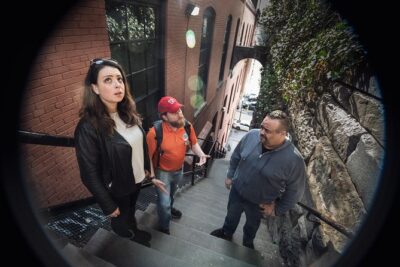
Ghosts of Georgetown & The Exorcist Steps Walking Tour
Read our review →
Georgetown Foodie Culinary Tour & Neighborhood Walk
Read our review →

Historic Georgetown: History, Gossip, & Architecture Walking Tour
Read our review →
Smithsonian Museums Walking Tour with Reserved Air & Space Entry
Read our review →Browse the lists this tour appears in