
Reviewed · WASHINGTON DC MUSEUM TOURS
Smithsonian Natural History + Museum of American History 8ppl Max
Henry the elephant greets you at the Natural History Museum, and the Hope Diamond waits inside with a reputation for bad luck. Later, Dorothy’s ruby slippers and the Star-Spangled Banner bring you into the American History Museum. This is a brisk, guided introduction to two museums that can easily swallow a whole day on their own.
I like the cap of eight, which gives your guide room to adjust the pace and follow your interests. I also like the contrast between natural history’s fossils and gems and American history’s objects of daily life, protest and popular culture.
One consideration: five and a half hours is a lot of museum time, and the lunch break may feel short. If you want to linger over every gallery or take a long meal, this guided highlights tour may feel rushed.
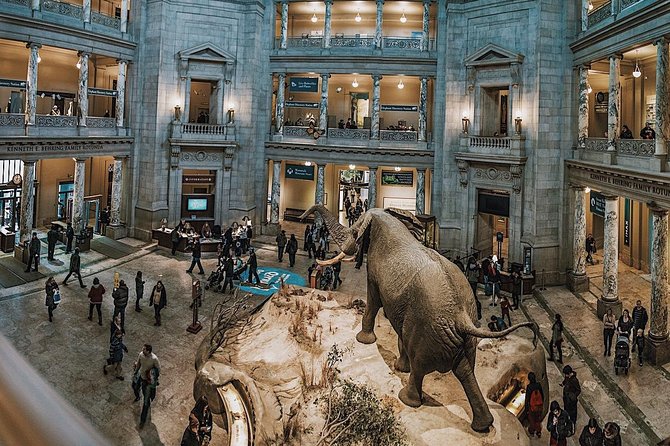
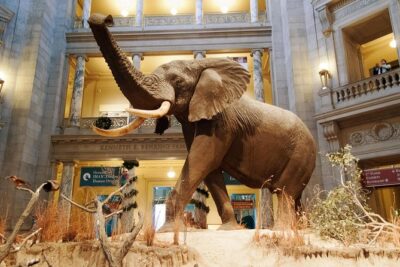
- Henry, the taxidermied elephant, welcomes you to the Natural History Museum.
- The Hope Diamond and the Fossil Hall put famous stones and prehistoric animals on the same route.
- Dorothy’s ruby slippers and the First Ladies exhibit anchor a tour through American culture and memory.
- The Greensboro Lunch Counter gives the American History Museum visit a direct connection to the struggle for civil rights.
- Eight people maximum makes it easier to ask questions and personalize the route.
- Two 2.5-hour museum visits make this a focused half-day, with a break in between.
Two Smithsonian museums, one guided route
The Smithsonian Natural History and American History museums are both large enough to reward a full visit. This tour gives you a guided introduction to each, with about two and a half hours inside both museums and a break between them. It begins at 10:00 am and lasts roughly five and a half hours.
That structure works well if you’re visiting Washington for the first time or want a clear starting point before returning to explore on your own. Instead of trying to navigate two vast collections without a plan, you get a guide to connect key objects with the stories behind them.
The experience is in English, and the group never exceeds eight people. That small size is a real advantage in museums, where a large group can block a display or make it hard to hear. Here, you can ask questions, share what interests you, and possibly spend more time on the objects that catch your attention.
The tour is not a substitute for seeing every gallery. Think of it as a focused route through major highlights, with context to help those objects stick in your memory. The best approach is to arrive ready to follow the guide, then make a note of the rooms you’d like to revisit later.
Henry and the Natural History Museum’s big draws
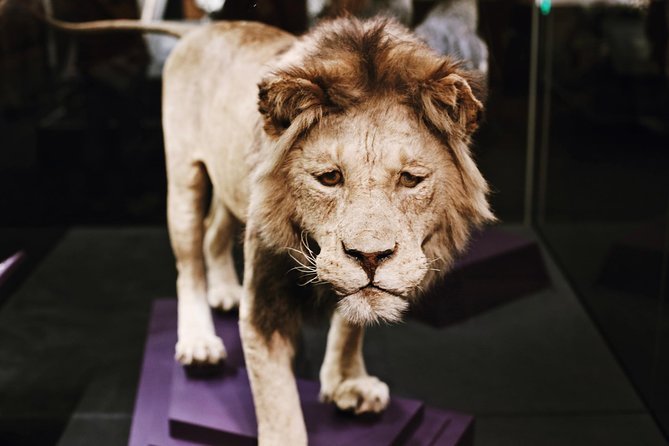
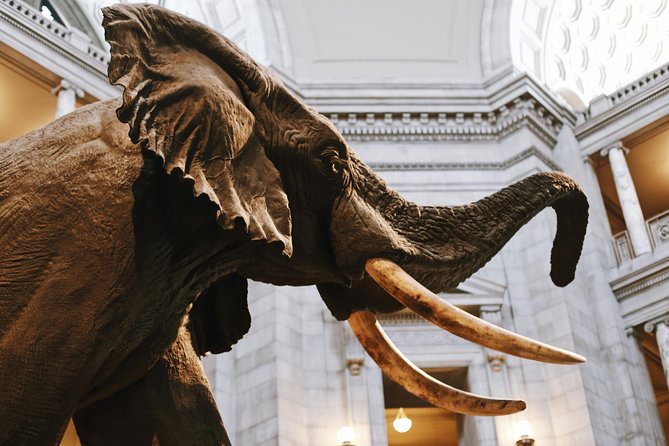
The first stop is the Smithsonian National Museum of Natural History, where a collection of stones, bones and insects offers plenty to pull your attention in different directions. Henry, the museum’s largest taxidermied elephant, is an easy-to-spot welcome. He also sets the tone: this museum’s scale can be surprising, even before you reach the fossils and gems.
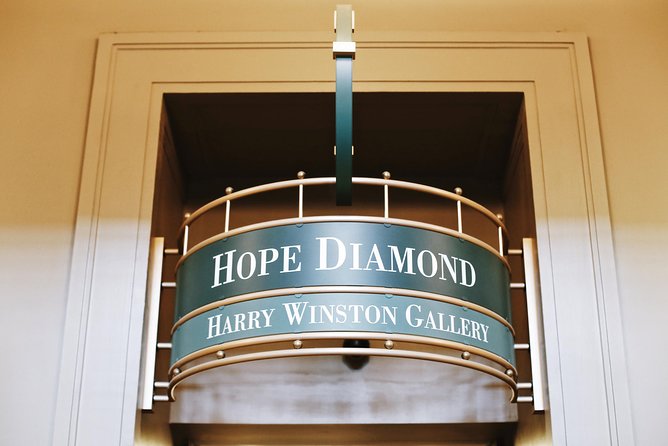
The Hope Diamond is one of the collection’s best-known objects, with a story that includes its supposed curse. A guide can help you look beyond its fame and consider why a single jewel has held public attention for so long. It’s a useful counterpoint to the museum’s other treasures, which range from fossils to specimens of the natural world.
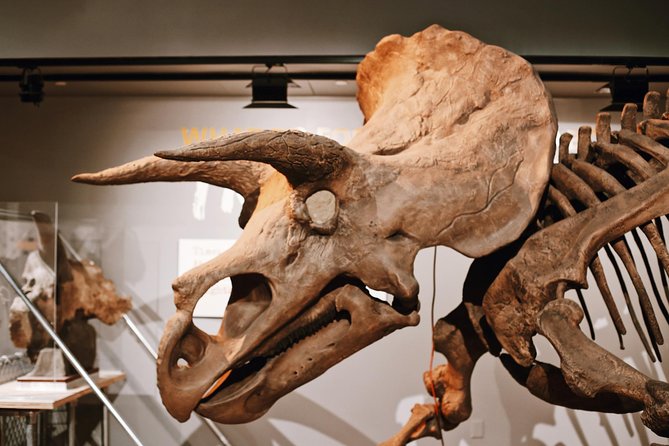
The recently renovated Fossil Hall is another major stop. Mastodons, a T. rex and a Diplodocus give the ancient world a striking sense of scale. Even if you’ve seen dinosaur skeletons elsewhere, standing near creatures that once moved through the world is a simple pleasure. This is also a good place for a guide’s explanations to add meaning to what might otherwise be a quick glance at a row of bones.
The two-and-a-half-hour visit gives you time to see several highlights, but not every room. That’s a sensible trade-off: a guide can help you choose what to notice rather than leave you to race from one famous object to the next. If fossils, gems or insects are particular interests, say so early. The tour is designed to be flexible, and guides can shape the route around what you want to see.
More museum tours around Washington DC:
- Guided African American History Tour with Reserved Museum Entry
★ 4.5 · 1,180 reviews - Washington DC: Museum of the Bible General Admission
★ 4.8 · 494 reviews - Smithsonian Museum of Natural History – Exclusive Guided Tour
★ 5.0 · 446 reviews
A break before the second museum
After Natural History, there’s a break to recharge before the American History Museum. The exact length of the break isn’t specified, so don’t count on a long sit-down meal. One person described having to eat a sandwich in a hurry, a practical warning if you tend to need more time to rest or eat.
Plan ahead. A quick meal or snack may suit the schedule better than trying to fit in a leisurely lunch. The tour’s length also makes comfortable shoes and a moderate level of fitness sensible choices. You’ll spend much of the day on your feet inside museum galleries.
The break matters because the second museum asks for a different kind of attention. Natural History often draws you toward the spectacle of a huge animal or a brilliant stone. American History asks you to think about how objects can reflect national identity, conflict and everyday life. A little pause between the two can help you reset.
Ruby slippers, the Star-Spangled Banner and American memory
The second stop is the National Museum of American History. Its collection brings together objects from politics, home life, transport, military history and entertainment. The tour’s strength is the range: the story of the country appears not only in major political events, but also in clothes, kitchens, cars, trains and Hollywood memorabilia.
Dorothy’s ruby slippers are an obvious crowd-pleaser, and a neat contrast with the Hope Diamond. Both objects are famous well beyond museum circles, but they carry different kinds of meaning. One belongs to a much-loved film; the other is a celebrated jewel with a legend attached. Seeing them on the same day gives you a lively measure of what people choose to preserve and remember.
The First Ladies exhibit is another major stop. It is described as the most visited exhibit in Smithsonian history, and it offers a route into questions of public image, custom and national life. Rather than treating the museum as a line of isolated artifacts, a guide can connect the objects to the people and moments behind them.
The Star-Spangled Banner that flew over Fort McHenry has a more direct link to the country’s political past. Its role in the War of 1812 helped inspire the song that became the national anthem in the 1930s. The Greensboro Lunch Counter shifts the focus to civil rights and the long fight over who could claim equal access in public spaces. These objects make the museum’s history feel less like a sequence of dates and more like a record of arguments that shaped the country.
The collection also includes cars, trains, military uniforms and political objects, along with material from popular culture. You won’t have time to study every section in depth, but a guide can make the visit coherent and help you see how very different objects can speak to shared themes of identity and change.
What a small group changes
A maximum of eight people is one of the tour’s clearest selling points. A small group can move through crowded galleries more easily than a large one, and it gives you a better chance to hear the guide without straining. It also makes it easier to ask for an explanation or tell the guide what you’re especially interested in.
The guiding style matters as much as the group size. Brenda is one named guide associated with a flexible highlights route, asking about interests and shaping the visit around them. Richard is another guide named for a well-paced, informative museum outing. Guide assignments can vary, so don’t book expecting a particular person. Instead, expect the benefit the format is meant to provide: a guide who can give context and adapt the visit.
The small group doesn’t mean a private tour. You’ll still share the route with other people, and the tour needs a minimum of two participants to run. If the minimum isn’t met, you’ll be offered an alternative or a full refund. Group discounts are listed as a feature, though the actual savings may depend on the booking details.
More history tours around Washington DC:
- DC Monuments & History Guided E-Cart Tour-Blankets
★ 4.5 · 450 reviews - African American History Tour with Museum of African American History Ticket
★ 4.5 · 390 reviews - Historic Georgetown: History, Gossip, & Architecture Walking Tour
★ 5.0 · 321 reviews - Washington, DC: African American History Tour & Museum Entry
★ 4.9 · 312 reviews
Is $166.15 a good value?
At $166.15 per person, this is not a low-cost way to enter the museums. Admission to the two stops is listed as free, so you’re paying for the guide, the planned route, the small group and the time saved deciding what to see. The value is strongest if you want an informed introduction to both museums and prefer a guide to lead you through the highlights.
It’s less compelling if you’re happy to explore at your own pace, already know the museums well, or want to spend long stretches in a few specific galleries. Free entry gives you the option to visit independently, and the tour’s time limit means you’ll have to leave many rooms for another day.
For a first visit, though, the price can make sense. You get two major museums in one organized outing and a guide who can give famous objects more context than a label alone. The group cap also means this is not a coach-sized tour where you follow a flag from room to room. Consider it a paid orientation, not a ticket to every corner of the collections.
Timing, meeting point and what to bring
The tour starts at 10:00 am at 1010 Madison Dr NW, Washington, DC 20004, and ends back at the same meeting point. It is near public transportation, but hotel pickup and drop-off are not included. You’ll need to make your own way to the start and arrange your return.
A mobile ticket is offered, and confirmation is received at booking. You must provide a mobile phone number with country code, so make sure the number is correct and can receive messages. The tour is offered in English.
Keep your bag small. Large bags and suitcases are not allowed inside the museums, and only handbags or small, thin backpacks are permitted through security. Security checks can still create lines, even when a tour is described as having priority access. Some rooms may have quiet or restricted speaking rules, and the guide will explain those before you enter.
Museum rooms or opening hours can change, and some collections vary during the year. If a museum’s opening time is delayed by more than an hour from the tour’s start, an appropriate alternative will be provided. The tour does not promise a refund or discount in that situation. Wear appropriate clothing for museum entry, and be prepared for a moderate amount of walking and standing.
Who should book this tour?
I’d recommend this tour most strongly to first-time visitors who want a manageable introduction to two major Smithsonian collections. It also suits families or pairs with different interests: one person can get excited about dinosaur fossils, while another finds more to enjoy in film, politics or American life. A guide can help bridge those interests.
It’s a good choice if you value context and a small group more than total freedom over your schedule. It is not the best fit if your ideal museum day means lingering over every label, taking a long lunch or focusing on only one collection. In that case, visit independently and give yourself more time.
Book it if you want the main stories and famous objects without having to plot the route yourself. Skip it if you prefer to wander slowly and don’t need a guide to help you decide where to look. Either way, the museums are substantial enough to deserve another visit.
FAQ
How long does the tour last?
It lasts approximately five hours and thirty minutes, including a break between the museums.
What time and where does the tour start?
The start time is 10:00 am at 1010 Madison Dr NW, Washington, DC 20004.
Which museums are included?
The tour visits the Smithsonian National Museum of Natural History and the National Museum of American History.
How large is the group?
The maximum group size is eight people. At least two participants are required for the tour to run.
Is museum admission included in the price?
Admission to both museums is listed as free. The tour price is $166.15 per person.
Is hotel pickup included?
No. Hotel pickup and drop-off are not included. The tour ends back at its starting point.
What language is the tour offered in?
The tour is offered in English.
What should I know about bags and physical effort?
A moderate level of physical fitness is recommended. Large bags and suitcases are not allowed inside; only handbags or small, thin backpacks are permitted through security.
Can I cancel for a refund?
You can cancel at least 24 hours before the start time for a full refund. Cancellations or changes made less than 24 hours before the start time are not accepted for a refund.
New on the list in Washington DC
- Washington, DC: Thanksgiving Day Lunch Cruise★ 4.7 · 3 reviews
- White House at Night: Scandals & Murder Adults Only Tour★ 4.5 · 4 reviews
- Washington DC: Private Custom Tour with a Local Guide★ 4.9 · 4 reviews
- Washington Monument Ticket & National Mall Memorials Tour★ 5.0 · 16 reviews
- Thomas Jefferson Monticello Small Group Day Tour from DC★ 4.8 · 16 reviews
- Washington: Mt. Vernon, Alexandria & Arlington Cemetery Tour★ 3.4 · 8 reviews
- Washington DC: Highlights Guided Walking Tour★ 4.6 · 6 reviews
- Washington, DC: The Good Liar: Brian Curry★ 5.0 · 3 reviews
Washington DC Museum Tours, compared.
Guided African American History Tour with Reserved Museum Entry
Read our review →
Smithsonian Museum of Natural History – Exclusive Guided Tour
Read our review →
African American History Tour with Museum of African American History Ticket
Read our review →
National Mall Tour with 10 Stops & U.S. Capitol or Museum Entry
Read our review →
Smithsonian Museums Walking Tour with Reserved Air & Space Entry
Read our review →
Capitol Combo: U.S. Capitol + Library Congress or Capitol Museum
Read our review →
U.S. Capitol Tour with Library of Congress or Capitol Museum
Read our review →Browse the lists this tour appears in