
Reviewed · WASHINGTON DC WALKING TOURS
African-American Heritage Walking Tour of U Street in DC
U Street’s story comes alive in the places where it happened: a jazz corridor once known as Black Broadway, a beloved chili shop with a changing mural, and a memorial to Black Union soldiers. This walk links music, public memory, and everyday neighborhood life in a compact stretch of Washington.
I like two things about the route: it connects famous names to real neighborhood places, and the Civil War memorial gives due attention to Black service members who helped shape Union policy and victory. Local guides have included Nur Ali, Darren, and Amanda, with visitors praising their personal, engaging storytelling.
The main caution is reliability. Last-minute cancellations and a guide not arriving have been reported, alongside a complaint about a shortened tour. The experience can also vary if indoor attractions are closed, so confirm the tour is going ahead and be prepared for a street-focused walk.
- U Street’s Black Broadway past: Learn how theaters and clubs hosted Duke Ellington, Cab Calloway, Pearl Bailey, Sarah Vaughan, and other major performers.
- Ben’s Chili Bowl mural: See a public artwork that has changed over time, reflecting the people and events that matter to Washington.
- A memorial to Black Union troops: Explore a tribute to the United States Colored Troops and the men who served in them.
- The Howard Theatre: Hear how a venue created for Black audiences became a major stage for Black music.
- A small-group walk: The group is capped at 20, with a licensed English-speaking guide and about two hours on foot.
U Street, where jazz made a home
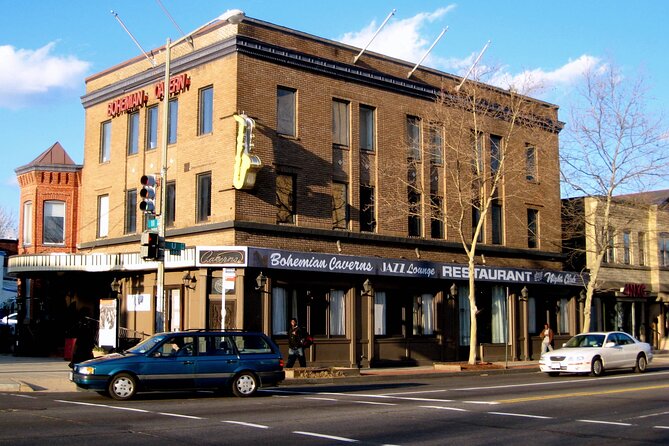
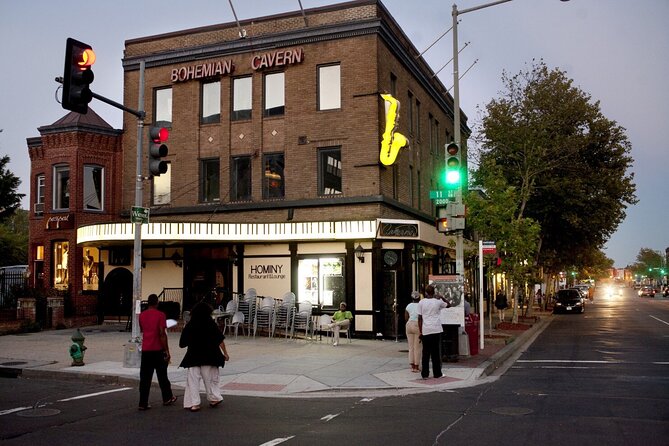
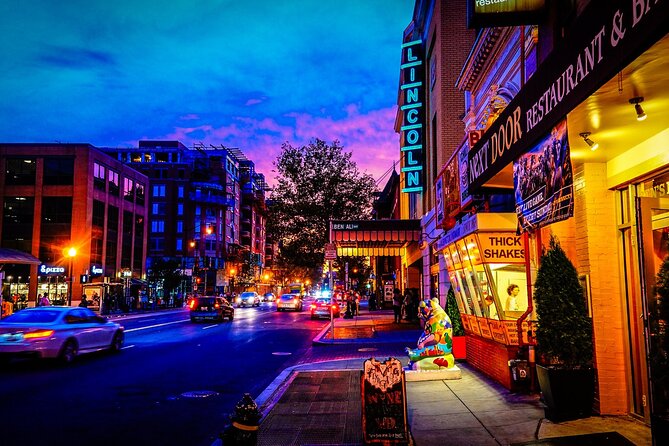
The tour begins at 5 pm at 1250 U Street NW, in the neighborhood whose nightlife once earned it the name Black Broadway. U Street was a center of African-American music and social life, with theaters and clubs that welcomed artists such as Duke Ellington, Cab Calloway, Pearl Bailey, Sarah Vaughan, and Jelly Roll Morton.
The listed first stop is brief, but the neighborhood is the thread that ties the walk together. Rather than treating U Street as a backdrop, a good guide can help you connect the music venues, public art, and community history to the lives of the people who made this stretch of Washington important.
The evening time suits a neighborhood walk. You see U Street as a lived-in part of the city, not just a set of historic plaques, and the guide can point out details as you move along. The route is on foot, so wear comfortable shoes and expect to spend much of the two hours standing or walking.
One practical point: this is a history tour, not a food tour. Ben’s Chili Bowl is part of the route, but food and drink are not included. If you want to try its signature half-smoke or chili fries, plan to buy them separately and check how much time the tour allows.
Ben’s Chili Bowl and a mural that keeps changing

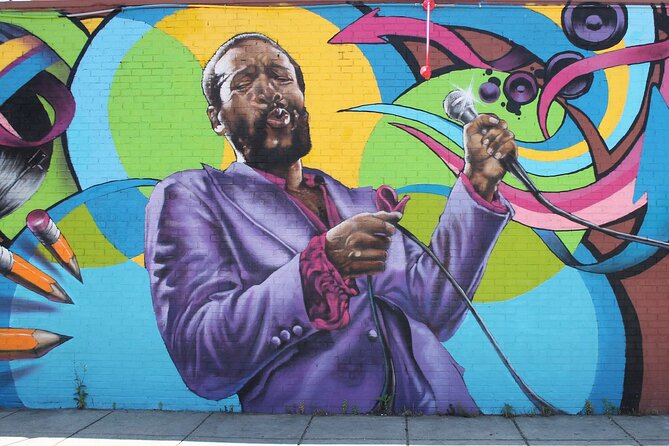
Ben’s Chili Bowl is one of U Street’s best-known landmarks, but this stop looks beyond the menu. The mural outside celebrates notable Black Americans and has changed several times since it first appeared in 2012.
That history gives the artwork an added layer. Earlier versions included Bill Cosby, Barack Obama, Donnie Simpson, and Chuck Brown. The Cosby portion was removed after allegations against him became public. A short-lived 2017 version honored the Washington Wizards during the NBA playoffs, before local artist Aniekan Udofia painted the mural that is there now.
I like this stop because it shows how public art records the present as well as the past. A mural is never just a fixed list of famous faces. Its changes reflect shifting public attitudes and the way a neighborhood chooses to represent itself.
The stop is scheduled for about 30 minutes, though the experience depends on the guide’s explanation and the group’s pace. Admission is free. You can take in the mural without buying food, but if eating at Ben’s is part of your plan, ask beforehand whether the walking schedule leaves room for it.
More walking tours around Washington DC:
- Arlington National Cemetery Walking Tour & Changing of the Guards
★ 5.0 · 2,566 reviews - DC: Hop-On Hop-Off with 17 Stops plus Arlington Walking Tour
★ 4.1 · 2,238 reviews - Ghosts of Georgetown & The Exorcist Steps Walking Tour
★ 5.0 · 610 reviews
The African American Civil War Memorial and the men it honors
The memorial is dedicated to Black troops who fought for the Union, a group whose military service is often given too little space in the standard Civil War story. After the Confederate states rebelled, Abraham Lincoln issued the Emancipation Proclamation and allowed Black men to serve in the Union Army and Navy.
More than 200,000 Black Americans filled 175 United States Colored Troops regiments. About 180,000 Black soldiers served in total, roughly one tenth of Union forces, and around 98,500 had formerly been enslaved. Their service helped the Union cause, while the men faced racism within the Union and particular violence from Confederate forces.
The Wall of Honor records the names of Black soldiers and their white officers. I like that the memorial makes the scale of this service visible. It turns a broad national story into names you can stand beside, and gives the guide a chance to discuss both military courage and the long fight for Black Americans to be allowed to serve.
The stop is listed as 30 minutes and includes the African American Civil War Memorial and Museum. Still, do not build your expectations around guaranteed indoor access. Attraction access has varied, and a past visitor described a day when the attractions were closed. The guide may explain the history from the memorial even if an interior visit is not possible.
The Howard Theatre, a stage built for Black audiences
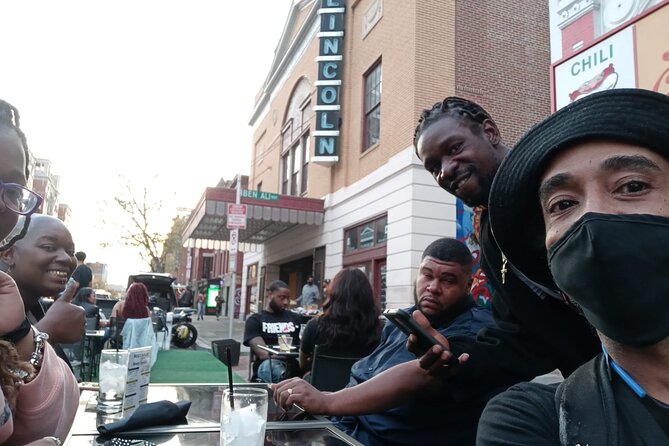
The Howard Theatre opened in 1910 in the Shaw neighborhood, near Howard University. It was founded as a place where Black men and women could enjoy entertainment at a time when other venues in the city excluded them. Its creation was more than a cultural milestone: it gave Black performers and audiences a space of their own.
The theater became a center for musical discovery before the Chicago jazz era and the Harlem Renaissance. Early events included amateur performances and band contests, while later acts ranged from Louis Armstrong to Kendrick Lamar. That span helps you see the Howard not as a relic, but as a venue with a long connection to changing Black music.
The tour allows about 30 minutes here. The building’s significance is as much about access as it is about the performers who took the stage. A guide can help you understand why creating a Black theater mattered in a segregated city, then link that story to the music and performers associated with the venue.
Some past walks have also included Howard University campus. That can be a welcome extra, but it is not one of the four stated stops, so treat it as a possible variation rather than a promise.
What the two-hour walk feels like
This is a guided neighborhood walk, not a bus tour. You meet at 1250 U Street NW, walk between stops, and finish back at the meeting point. The listed stop times add up to about 92 minutes, while the experience is described as approximately two hours. The remaining time allows for moving between sites and the guide’s commentary, though the exact rhythm can vary.
The group can include up to 20 people. That is small enough to make questions practical, but not a private tour. Your guide is licensed, and the experience is offered in English. Guides who have led the walk include Nur Ali, also referred to as Nur or Nor, as well as Darren and Amanda. The guide assigned to your date may differ.
The strongest part of this format is the chance to hear neighborhood context as you walk. Past participants have praised guides for making the history personal and relaxed, and for connecting Washington’s past with its present. One account singled out a guide’s discussion of Black women’s Civil War contributions, including a woman who disguised herself as a man to enlist. That is the kind of specific story that can make a short walking tour stick with you.
The weaker side is the possibility of uneven delivery. Reports include cancellations only a few hours before the start, a guide failing to appear, and a walk lasting much less than the stated two hours. Those problems are not a reason to dismiss the tour, but they matter if you have arranged your day around it. Check for confirmation and keep the operator’s contact details handy.
More history tours around Washington DC:
- Guided African American History Tour with Reserved Museum Entry
★ 4.5 · 1,180 reviews - DC Monuments & History Guided E-Cart Tour-Blankets
★ 4.5 · 450 reviews - Smithsonian Museum of Natural History – Exclusive Guided Tour
★ 5.0 · 446 reviews - African American History Tour with Museum of African American History Ticket
★ 4.5 · 390 reviews
Is $90 a fair price?
At $90 per person, this is not a bargain-priced stroll. The fee covers a licensed guide, not transportation, food, or drink, and admission to the listed stops is free. You are paying chiefly for the interpretation: the links between U Street’s music history, Black military service, public art, and the Howard Theatre.
That can be worthwhile if you want a focused introduction to African-American Washington and value a local guide’s stories more than a long list of interior attractions. A strong guide can add detail you might miss on a self-guided walk, especially around the changing mural and the Civil War memorial. If you are comfortable reading plaques and exploring at your own pace, you may prefer to visit the public sites independently and spend the $90 elsewhere.
The tour’s value depends heavily on its delivery. The positive experiences center on guides who are engaging, personal, and passionate about the neighborhood. The negative experiences center on operational problems and a shorter-than-expected walk. That contrast is worth weighing before you book.
Who should take this walk?
I would choose this tour if you want a compact, guided introduction to Black Washington, especially if U Street’s jazz history and the Civil War memorial interest you. It suits history-minded visitors who like learning outdoors and want a local voice to connect places that can otherwise feel like separate stops.
It is also a good fit if you are traveling with someone who prefers stories and conversation to a long museum visit. The walk is limited to about two hours, and the group size is capped at 20. You should be comfortable with a moderate level of physical activity and walking between sites.
It is less suited to anyone who needs guaranteed access to every indoor attraction, wants a food experience included, or has no flexibility if a tour is canceled. The start is at 5 pm, and the activity requires good weather and a minimum number of participants. Free cancellation is available up to 24 hours before the start; within 24 hours, the fee is not refunded.
Should you book the U Street heritage walk?
Book it if you want a guided, place-based account of Black Washington and are especially interested in music, the United States Colored Troops, and the neighborhood’s public art. The best reason to go is the mix: a landmark mural and celebrated theater sit alongside a memorial that centers Black military service.
Before paying, consider the reported cancellation and no-show problems, and confirm the tour is running close to your date. Go with sensible expectations: this is a walking history tour, not an all-access museum package, and the guide’s storytelling is central to the value. If that trade-off works for you, the route offers a meaningful way to understand U Street beyond its restaurants and nightlife.
FAQ
How long is the tour?
It lasts approximately two hours. The listed stop times total about 92 minutes, with additional time for walking between locations and commentary.
What time does the tour start?
The stated start time is 5 pm.
Where does the tour meet?
Meet at 1250 U Street NW, Washington, DC 20009.
Where does the tour end?
It ends back at the meeting point.
What places does the tour include?
The route lists U Street, the Ben’s Chili Bowl mural, the African American Civil War Memorial and Museum, and the Howard Theatre.
Is the tour offered in English?
Yes. The tour is offered in English.
How many people can join?
The maximum group size is 20 people.
What is included in the price?
A licensed tour guide is included. Transportation, food, and drink are not included.
How much does the tour cost?
The stated price is $90 per person.
Can I cancel for a refund?
You can cancel at least 24 hours before the start time for a full refund. Cancellations made less than 24 hours before the tour are not refunded.
New on the list in Washington DC
- Washington, DC: Thanksgiving Day Lunch Cruise★ 4.7 · 3 reviews
- White House at Night: Scandals & Murder Adults Only Tour★ 4.5 · 4 reviews
- Washington DC: Private Custom Tour with a Local Guide★ 4.9 · 4 reviews
- Washington Monument Ticket & National Mall Memorials Tour★ 5.0 · 16 reviews
- Washington DC: Highlights Guided Walking Tour★ 4.6 · 6 reviews
- Thomas Jefferson Monticello Small Group Day Tour from DC★ 4.8 · 16 reviews
- Washington: Mt. Vernon, Alexandria & Arlington Cemetery Tour★ 3.4 · 8 reviews
- Washington, DC: The Good Liar: Brian Curry★ 5.0 · 3 reviews
Washington DC Walking Tours, compared.

Arlington National Cemetery Walking Tour & Changing of the Guards
Read our review →
Hop-On Hop-Off with 17 Stops plus Arlington Walking Tour
Read our review →
Ghosts of Georgetown & The Exorcist Steps Walking Tour
Read our review →
Georgetown Foodie Culinary Tour & Neighborhood Walk
Read our review →
Historic Georgetown: History, Gossip, & Architecture Walking Tour
Read our review →
Smithsonian Museums Walking Tour with Reserved Air & Space Entry
Read our review →Browse the lists this tour appears in