
Reviewed · GEORGETOWN TOURS
The History of Black Georgetown
Georgetown’s polished streets tell only part of the story. This walking tour brings you to places tied to Black community life, the slave trade, education, and remembrance, from university buildings to the oldest cemetery in Georgetown.
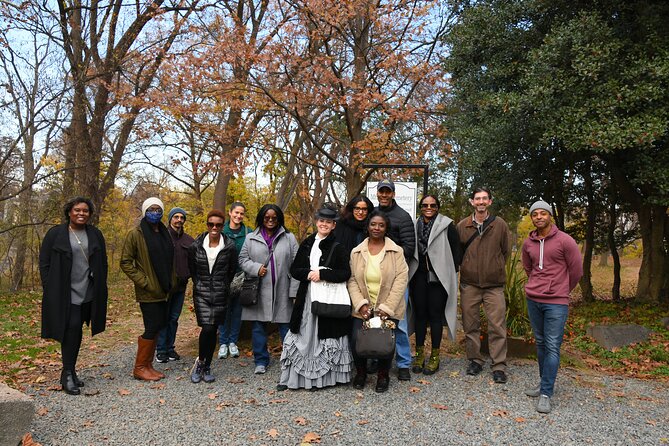
I like two things in particular: the stops connect large historical forces to specific neighborhood addresses, and the small-group format gives the guide room to adjust the pace and conversation. Katie has been praised for her personable style and thoughtful pacing, though your guide may differ.
One consideration: this is a two-hour-plus walk, and the route ends at a cemetery away from the starting point. You’ll want comfortable shoes, enough time afterward to get where you’re going, and an interest in history that can be difficult to hear.
- Healy Hall opens the story with the legacy of Georgetown University president Patrick Healy.
- Bell’s Court recalls close-knit Black alley communities once found across Washington, DC.
- A stop near 3146 O Street addresses the slave trade and the former use of row houses as holding pens.
- Mount Zion United Methodist Church and Rose Park connect the tour to community institutions and public gatherings.
- The route ends at two cemeteries, where enslaved and free Black Georgetown residents are buried.
- At $30 per person, the price includes more than two hours of guided historical context, but not refreshments.
Georgetown’s Black history, told street by street
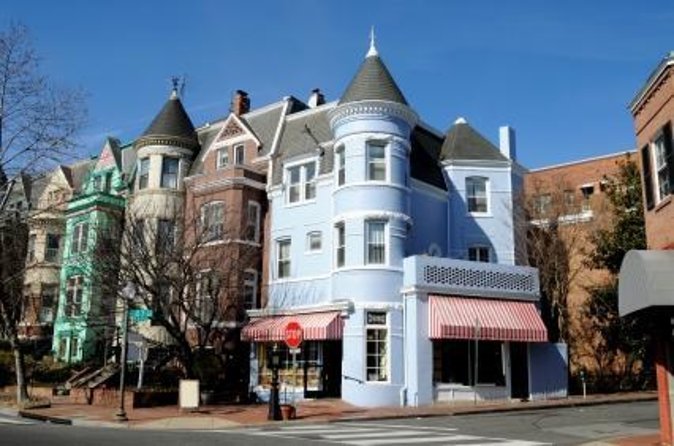
This walk asks you to look past the grand façades and familiar Georgetown image. The route takes in university architecture, modest alleyways, rows of houses, a church, a park, and a cemetery. Together, these places show how Black life in Georgetown was shaped by slavery, education, community, and public memory.
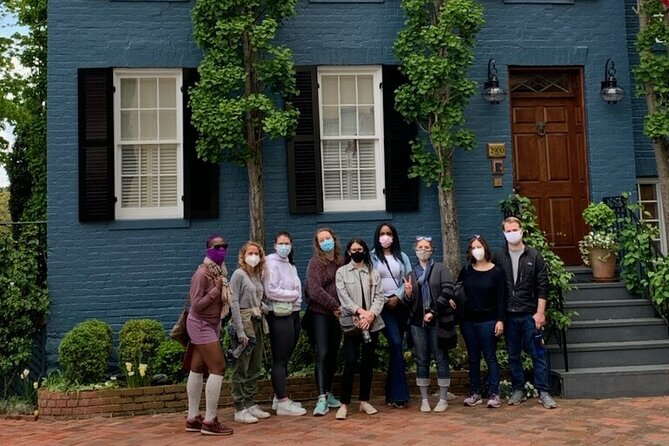
The tour is led by an experienced guide and lasts about two hours to two and a half. That length gives you time to stop and talk at each site, rather than simply march past a list of addresses. The route is capped at 20 people, and it is described as a private, personalized experience. If you enjoy asking questions or hearing how a place fits into a larger story, that format can be a real advantage.
Katie is one guide associated with the tour. Her relaxed pacing and friendly manner have been singled out, and the tour’s open atmosphere seems suited to a subject that calls for attention and care. Guide assignments can change, so don’t assume Katie will lead your date.
Healy Hall and Patrick Healy’s legacy
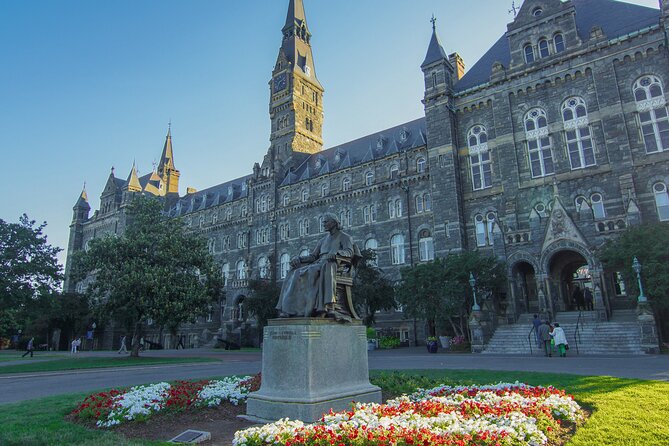
The tour begins at 3206 O Street NW, by Georgetown University’s gothic-style Healy Hall. The building was constructed at the direction of Patrick Healy, the university’s only Black president, and named for him. That makes the first stop more than an architectural introduction: it puts Black history in a place many people associate mainly with the university’s prestige.
You’ll spend about 10 minutes here, with no admission charge. The brief stop is a useful starting point, especially if you have passed the campus before without knowing Healy’s place in its story. It also sets the tone for the walk: familiar Georgetown landmarks can hold histories that are easy to overlook.
The stop is outdoors, so expect the guide to supply the context rather than a visit inside the building. If you want to see the university’s interiors, this tour does not promise that. Its focus is the street-level history of the neighborhood.
More Georgetown tours around Washington DC:
- Ghosts of Georgetown & The Exorcist Steps Walking Tour
★ 5.0 · 610 reviews - Georgetown Foodie Culinary Tour & Neighborhood Walk
★ 5.0 · 437 reviews - Gastronomic Georgetown Walking Food Tour
★ 4.5 · 373 reviews
Bell’s Court and Georgetown’s alley communities
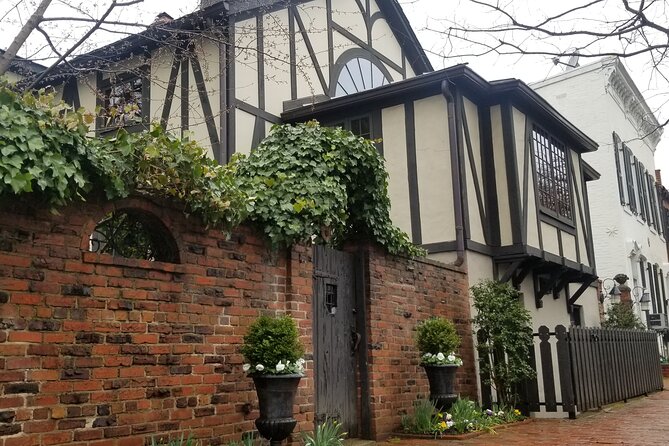
Next, you visit Pomander Walk, once known as Bell’s Court and owned by Alexander Graham Bell. The walk offers a contrast with Georgetown’s better-known houses and grand addresses. Bell’s Court was part of a wider pattern of alleyway communities across Washington, where Black residents built close-knit neighborhoods.
This stop is especially useful because it shifts the story from famous individuals and institutions to the texture of everyday community life. The tour gives you a chance to consider how an alley could function as more than a passage between streets. You’ll spend about 10 minutes here.
The account provided for the stop does not give more detail about the community’s residents or its exact period of use. If those specifics matter to you, ask the guide what is known and what remains uncertain. Good historical tours leave room for questions, rather than filling gaps with guesses.
A practical pause at Thomas Sweet
About halfway through the walk, the group stops at Thomas Sweet for around 15 minutes. This is a refreshment and bathroom break, a sensible pause on a route that can last up to two and a half hours.
Coffee and tea are not included in the $30 price, so plan to pay separately if you want a drink. The break is also a good moment to rest your feet, ask the guide a question, or catch up if a detail from an earlier stop deserves another look. It is a practical feature, not a major attraction in itself.
The former holding pens on O Street
At 3146 O Street NW, the tour addresses one of its starkest subjects. The row houses at this address once served as holding pens for enslaved people. The pens were later torn down by an Irish entrepreneur who had spent childhood as an indentured servant in the West Indies.
This short, roughly 10-minute stop brings the history of the slave trade close to the present-day streetscape. The tour summary also identifies Georgetown as a port connected to the trade, giving the guide a chance to explain how the neighborhood fits into a wider system. You should expect serious material, not a light anecdote tucked between pretty houses.
The contrast between the present appearance of the street and its past use is part of the point. A brief stop cannot cover every aspect of enslavement or the local trade, but it can give you a clear place to connect the subject to Georgetown itself. If you prefer history tours that avoid painful topics, this is not the right walk.
More history tours around Washington DC:
- Guided African American History Tour with Reserved Museum Entry
★ 4.5 · 1,180 reviews - DC Monuments & History Guided E-Cart Tour-Blankets
★ 4.5 · 450 reviews - Smithsonian Museum of Natural History – Exclusive Guided Tour
★ 5.0 · 446 reviews - African American History Tour with Museum of African American History Ticket
★ 4.5 · 390 reviews
Emma Brown and the story of Black education
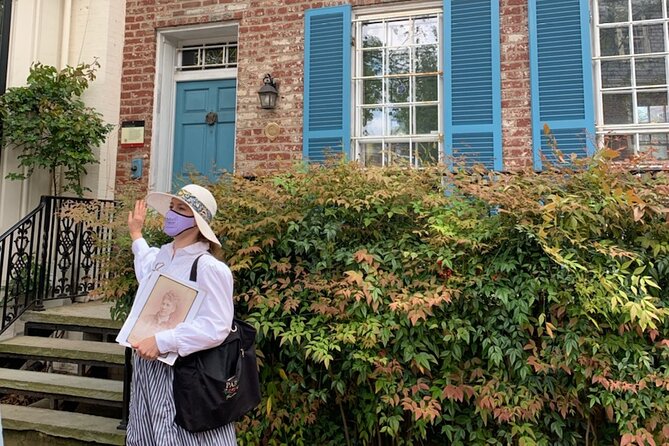
The route also includes the house of Emma Brown, described as one of the first Black teachers in Washington, DC, to reach the level of principal. The address is not specified in the tour details, and no visit inside the house is promised.
Even as a short stop, Brown’s story broadens the tour beyond slavery and oppression. Her achievement points to Black education and professional life in the city. You’ll hear about a person whose work mattered within an institution, not only about buildings that marked hardship.
Ask your guide how Brown’s career unfolded and what is known about the house. The supplied information gives the key point of her significance, but not a full biography, so the depth of this stop may depend on the guide’s account.
Mount Zion United Methodist Church
At 1332 29th Street NW, the walk reaches Mount Zion United Methodist Church, one of Georgetown’s oldest Black congregations. You’ll spend about 10 minutes here. The stop adds the story of a lasting community institution to a route that has already covered university history, alley life, enslavement, and education.
Churches often serve as important markers of community history, and this stop gives the guide a setting to discuss the congregation’s place in Georgetown. The tour details do not promise entry into the church, so treat this as an exterior history stop unless your guide says otherwise.
For you, the value is in seeing the church as part of a neighborhood story rather than as an isolated landmark. It helps connect the next stop, Rose Park, where community life also took shape in public.
Rose Park’s rallies and gatherings
Rose Park was the site of political rallies and community gatherings for Georgetown’s Black community. The tour spends about 10 minutes here, shifting the focus from buildings to the use of shared outdoor space.
A park can be easy to pass without thinking about who gathered there or what they were working toward. This stop gives you a chance to consider the role of public meeting places in community life. The tour information does not name specific rallies or dates, so ask the guide for examples if you want to understand the park’s history in greater detail.
Mount Zion and Female Union Band Society Cemeteries
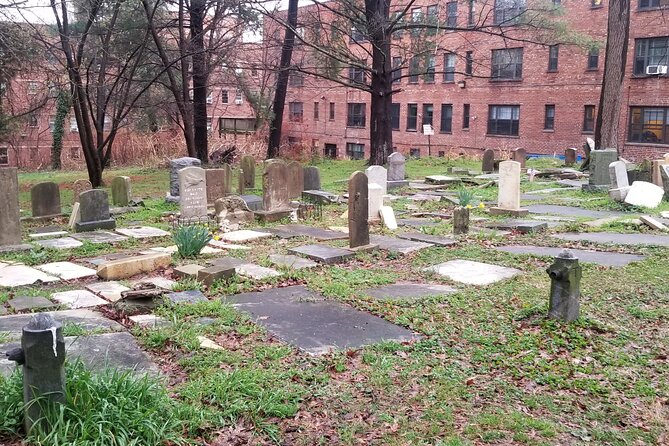
The final stop is Mount Zion and Female Union Band Society Cemeteries, at 2501 Mill Road NW. The cemeteries are described as the oldest in Georgetown and contain the remains of enslaved and free Black residents. This is a fitting, reflective end to a walk that has moved between daily life, institutions, and the legacy of the slave trade.
The cemetery stop is listed at about 10 minutes. That is enough for an introduction, but not a long, independent visit. If you want more time to take in the site, check with the guide about the schedule before the tour ends. The route finishes here, not back at the university starting point, so plan your onward journey from Mill Road.
This last stop also gives the earlier addresses a human dimension. The tour’s subject is not only buildings and events. It is also the people who lived, worked, gathered, learned, and were laid to rest in Georgetown.
What $30 buys you, and what to plan for
At $30 per person, the main value is the guide’s interpretation across more than two hours. You are paying for a connected account of several sites, not for admission to museums or included drinks. Every listed stop is free to enter or view, and coffee or tea at Thomas Sweet costs extra.
The tour is booked, on average, 47 days ahead, which suggests it is wise to plan early if you have a fixed date. Confirmation is provided at booking, and tickets are mobile. The activity is offered in English.
You’ll need a moderate level of physical fitness for a neighborhood walking tour of this length. Service animals are allowed, and the meeting point is near public transportation. The group has a maximum of 20 people, which can help keep the walk manageable, though the exact feel depends on attendance.
Weather and minimum group requirements can affect whether the tour runs. If poor weather or too few bookings lead to cancellation, you’ll be offered another date or a refund. You can cancel for a full refund up to 24 hours before the start time; changes or cancellations inside that window are not accepted.
Who will get the most from this walk
I’d recommend this tour if you want to understand Georgetown beyond its most familiar image of stately houses and prominent residents. It suits history-minded locals as well as first-time visitors, particularly if you have already seen the central sights and want to hear a more specific neighborhood story.
It also works well for a small group of friends or family members who like to talk through what they are seeing. The maximum group size and personalized format can make it easier to ask questions than on a large, scripted tour. A friend who has visited Washington many times could still find new material here, especially if Black Georgetown’s history is not already part of their usual itinerary.
Go in with realistic expectations. The walk touches a range of subjects, but two to two and a half hours cannot give every person, site, or period equal depth. The route includes difficult history, and some stops are short. If you want an indoor museum experience, extensive time at each landmark, or a purely architectural tour, choose something else.
Should you book The History of Black Georgetown?
Book it if you want a guided, street-level account of Black history in Georgetown and are comfortable with a walk that includes the history of slavery. The route’s strongest feature is its range: Healy Hall, Bell’s Court, the former holding pens, Emma Brown’s story, Mount Zion Church, Rose Park, and the cemeteries make a connected tour rather than a single-topic lecture.
At $30, the price is fair for more than two hours with a guide, especially if you value context and conversation. Bring comfortable shoes, budget separately for a drink, and leave time to continue from the cemetery at the end. If those basics suit you, this is a thoughtful way to see a side of Georgetown that is easy to miss on your own.
FAQ
How long is The History of Black Georgetown tour?
It lasts about two hours to two hours and 30 minutes.
How much does the tour cost?
The listed price is $30 per person.
Where does the tour start?
It starts at 3206 O Street NW, Washington, DC 20007.
Where does the tour end?
It ends at Mount Zion and Female Union Band Society Cemeteries, 2501 Mill Road NW, Washington, DC 20007.
What language is the tour offered in?
The tour is offered in English.
Is coffee or tea included?
No. Coffee and tea are not included. The group stops at Thomas Sweet for a refreshment and bathroom break.
How large can the group be?
The maximum group size is 20 travelers.
How far in advance is the tour usually booked?
On average, it is booked 47 days in advance.
Can I cancel for a refund?
You can cancel up to 24 hours before the start time for a full refund. If the tour is canceled because of poor weather or because the minimum number of travelers is not met, you’ll be offered another date or a refund.
New on the list in Washington DC
- Washington, DC: Thanksgiving Day Lunch Cruise★ 4.7 · 3 reviews
- White House at Night: Scandals & Murder Adults Only Tour★ 4.5 · 4 reviews
- Washington DC: Private Custom Tour with a Local Guide★ 4.9 · 4 reviews
- Washington Monument Ticket & National Mall Memorials Tour★ 5.0 · 16 reviews
- Thomas Jefferson Monticello Small Group Day Tour from DC★ 4.8 · 16 reviews
- Washington: Mt. Vernon, Alexandria & Arlington Cemetery Tour★ 3.4 · 8 reviews
- Washington DC: Highlights Guided Walking Tour★ 4.6 · 6 reviews
- Washington, DC: The Good Liar: Brian Curry★ 5.0 · 3 reviews
Georgetown Tours, compared.
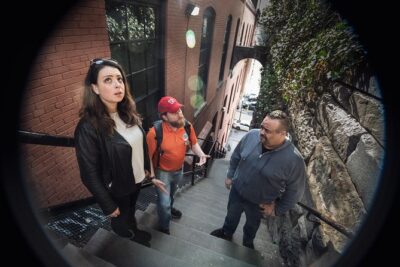
Ghosts of Georgetown & The Exorcist Steps Walking Tour
Read our review →
Georgetown Foodie Culinary Tour & Neighborhood Walk
Read our review →
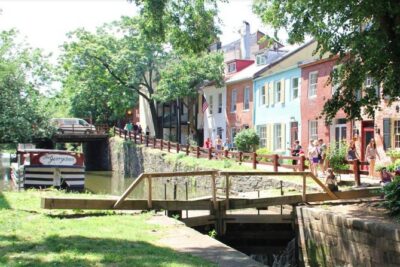
Historic Georgetown: History, Gossip, & Architecture Walking Tour
Read our review →
Tastes of Georgetown Food & History Small Group Walking Tour
Read our review →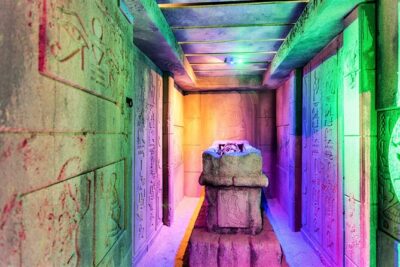
The Escape Game DC: 60-Minute Adventure in Georgetown
Read our review →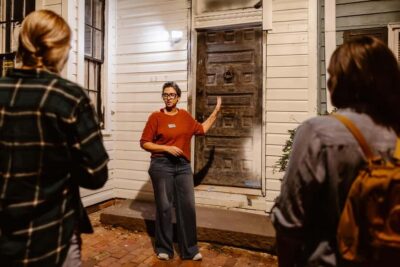
Ghosts of Georgetown & The Exorcist Steps Haunted Tour
Read our review →
Browse the lists this tour appears in